How to Know When to Change Up a Medication

How to Know When to Change Up a Medication

There is a sure-fire easy answer to this: Talk to your doctor about it! I know many people, especially us mental illness people-types, who think decreasing or taking ourselves off of a psych med is a good idea, especially if we are manic and feeling good. In the past, every time I became hypomanic I would tell my doctor I wanted to try a med reduction and she would say, no the meds are working that is why you feel good. Then we figured out that wanting to come off a med was actually a sign of hypomania for me.

Fast forward to today…Life is becoming very different for me. I have been in some intense therapy, healing from childhood trauma and neglect, for over a year now and finally getting really good at setting boundaries with others and making major changes in my life that more fully align with my values and what I truly want to do and not want to do. Because of this, my mental health is such that I no longer need one of my sleep medications. I am actually sleeping ten times better than I used to with it, when I wasn’t as mentally healthy.

I am still on several other psych meds and am talking with my doctor about the next one to wean off of. She is letting me take the lead on which one to try because one is not necessarily more important than another.

I am weighing out my options based on how hard they are to wean off of, what their current risks and side effects are, and how much they affect my physical health. I know what I want to try because of its current risks and side effects but it happens to be the most difficult one to come off of. I tried once before, many years ago, and the irritability it caused affected my relationships. Granted, I believe now that I cut the dose down too much as I was doing it without my doctor’s supervision (which I said at the beginning of this post is a big no-no.)

With my doctor’s help this time I will tell her my concern and hopefully, we can find a way to minimize the irritability and get me off of this med in particular.

Have you tried weaning off a psych med with or without your doctor’s supervision? I’d love to hear about your experience.

P.S. In my last post, I wrote about having a goal of writing blogs of 600+ words. That blog post was about 200 words and this one is a little over 400. I am making progress!

Give Me the Best Mental Health Blogs You Follow

I started this blog in 2011 (or 2012. It has been so long I can’t remember for sure.) At first I was very active but as the years wore on I got away from posting regularly and reading other blogs as well.

I checked a year or two ago and found that the people I had formed relationships with here on WordPress are not active on their blogs anymore at all. I miss them even though we only conversed via comments on one another’s blogs.

I would like to get back to writing about mental health topics on a regular basis. The thing that makes it difficult is that I don’t want to make it like a diary and tell the details of my personal life, but strictly writing in a research article style doesn’t feel right either. I will have to work on finding a balance between the two.

I also want to form some new blogger relationships which will help me stay connected with the topics I am interested in. So, please give me some good recommendations for mental health WordPress blogs. And if you have one, all the better!

Thanks for being a subscriber to my site, Write into the Light.

Until next time,

WiL (she/her)

Inner Child

Invisible
I am
No cloak
I just
Am

Something
Unseen
An extra
Unnoticed

Childhood
Done
Unto
Me.

And now
I see you
And I love you
She says
To me.

I see you and I love you!

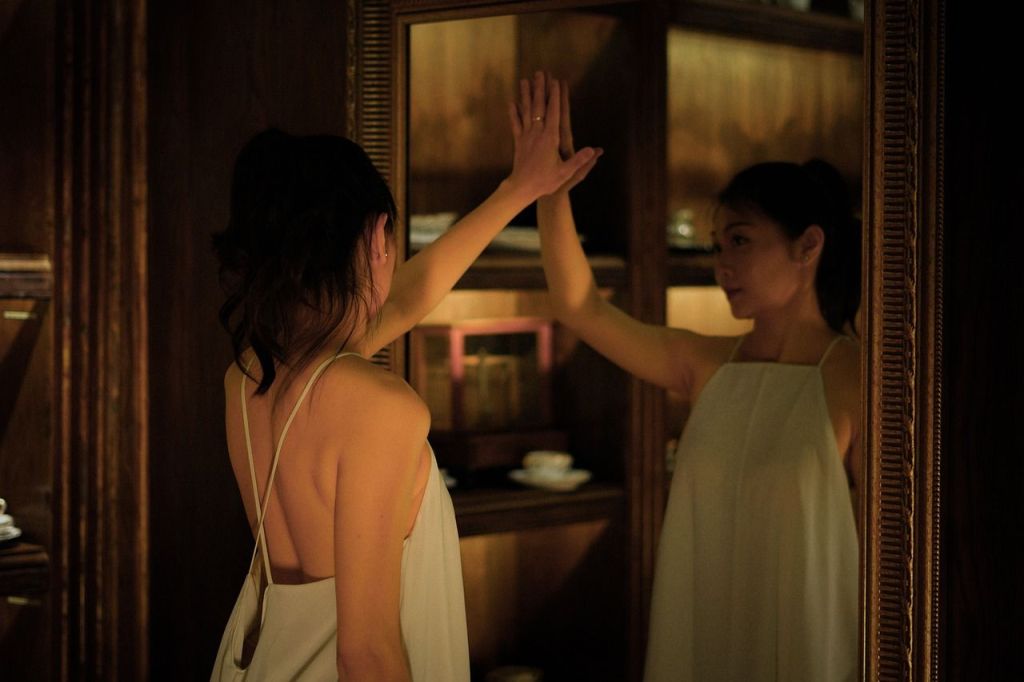
I see her
Reflection
Addressing
Me.

Connection with Others Who Have Mental Health Issues

In an attempt to build up the Write into the Light community, I am committing to post a blog every Monday when possible. I want to get back to providing informative and engaging articles on mental health topics.

It has been difficult for me over the last several years because one of my medications has greatly diminished my creative processes. Additionally, I am no longer on another medicine that used to help me focus and concentrate.

Therefore, I have decided to research topics and enlist the help of an AI app to help me create reliable, organized, and detailed content. I want to be completely transparent about this because I want to maintain the trust and faith you have shown me by your support of my writing over the past 13 years.

If you have any questions or requests for specific topics, please let me know in the comments. Thank you so much!

Being a Mom with Anxiety

I became a mom almost 21 years ago. I was not yet diagnosed with mental illness. About six months into motherhood when postpartum depression had a strong hold on me, I went to my doctor for help and she put me on an antidepressant. About six years later, after the birth of my second child, I was diagnosed with bipolar type 2 disorder. It is at this point that I think my anxiety developed into something that I could not handle without professional help or medication because I began to have panic attacks along with generalized anxiety and eventually severe social anxiety.

Play dates were difficult at best and attending sporting events were and still are extremely stressful and anxiety producing (hint: wearing earbuds playing calming music helps a lot!) Having children who are growing up with their own anxiety and depression issues only increases the stress of motherhood exponentially for a mom with anxiety. On the up side, having an anxiety disorder has better equipped me to completely empathize with my children and help them in ways I would not be able to if I hadn’t already learned skills to deal with my own anxiety.  Some of these skills include the following:

  • Setting healthy boundaries by saying no to things when I feel I am reaching my threshold for responsibilities and daily activities. 
  • Asking for help with daily responsibilities from my partner, family, and friends.
  • Taking time for self care activities like reading a chapter of a book, journaling, taking a bubble bath, listening to calming music, watching an episode of a series I enjoy, petting my dog or cat, taking a nap, sitting in the sun for a few minutes, doing my nails, getting my hair done, meditating, or doing some stretches or simple yoga exercises.
  • Not being hard on myself when I can’t do things I wish I could. 
  • Accepting my limitations.
  • Praying for the strength to do as much as possible without making myself sick.
  • Being thankful for all I can do and for all I have instead of focusing on the negative aspects of having an anxiety disorder. 

Being a mom with anxiety has its challenges, but with an awareness of and honoring what your limitations are and following the suggestions above, you can thrive as a mom and a person with anxiety. 

Can Being Too Busy Cause Anxiety?

The short answer to this question is yes, for sure. All it took was four doctors’ appointments in the span of two weeks and planning a birthday party for my mom on top of my normal daily tasks of running the kids to school and activities and keeping up on housework to bring me to DEFCON 1 anxiety.

My anxiety tends to present itself as irritability towards anyone whom I hold near and dear to me, most notably my beloved husband, poor guy.  I not only become dissatisfied with everything that is going on in the house, but I also can’t stand the way anyone is doing anything around me. 

It is usually best if I retreat to a quiet room on my own to chill out with something to read, watch or listen to. Sometimes it does help to talk it out with my husband as well. 

Also here is a great list of dos and don’ts when I find myself too busy and filled with anxiety. 

  1. Don’t over commit.  For example, I rescheduled some of my doctor’s appointments for a time when I wasn’t so busy. 
  2. Do prioritize.  I found that I could let laundry pile up a little that week and catch up on it the following week when I wasn’t so busy so I could make it to my appointments.
  3. Do delegate so you don’t have to push yourself so hard.  I asked for help in driving the kids to some of their activities that week to give myself a break. 
  4. Don’t forget to treat yourself for working so hard.  Mocha lattes every other afternoon for two weeks!

So, as you can see being too busy can cause anxiety especially in someone who already has an anxiety disorder.  However, there are ways to cope with it and decrease it if you take the time to make the appropriate adjustments to your schedule and approach. 

Keep an eye on your busyness before anxiety has its eye on you. 

Checking In to See…

Would appreciate your feedback as I’d like to plan out some upcoming posts with an audience in mind and to connect with you out there. 😊

Serotonin: What Is It and How To Get It Naturally

Serotonin is a neurotransmitter in the brain that is related to depression. It is thought that those with depression are lacking in serotonin. Some antidepressant medications block the reuptake of serotonin leaving more available for use by the brain, thereby decreasing depression symptoms or so the theory goes.

Besides medication, which has been proven in clinical trials to have a significant effect on depression symptoms, there are anecdotal treatments some people say increase serotonin in the brain. These “treatments” aren’t always backed by scientific studies and should be discussed with your doctor before being tried especially if they involve any sort of supplement or exercise, but most appear relatively harmless and may even be helpful in relieving some depression symptoms in some people. These serotonin-producing ideas include the following:

  • Get more tryptophans from foods like lean meats, eggs, and dairy.
  • Get a massage.
  • Boost your vitamin B.
  • Soak up the sunshine or use a light therapy box.
  • Add more magnesium to your diet with dark, leafy veges, fish, bananas, and beans.
  • Be more positive, practice gratitude.
  • Reduce sugar intake.
  • Meditate.
  • Increase exercise.
  • Increase vitamin C.
  • Practice self care to reduce stress.
  • Keep a journal or practice some form a regular writing.

Don’t try to make all the changes at once, if it seems overwhelming. Tackle one or two items a month. Eventually you will get to feeling better and better and before you know it all of these things will become second nature, if you tackle them like a marathon not a sprint.

Play the long game. These changes are lifetime goals. You have all the time in the world to reach them, but start making them one or two at a time. You can do it and will be glad you did as you begin to feel better and better little by little until it adds up to be quite a lot!

It took me over ten years to get to some real solid stability in my bipolar depression. I did it by addimg a lot of coping skills and healthy habits to my life year after year. Trauma work in therapy and constant medication management was a huge part of it, too, but the anecdotal cures were essential and still are. They may be for you, too.

As always, comments are open for any questions you may have for me and for any shares you have regarding your experiences. Thanks for reading.

5 Things to Remember

stop-youth-suicide-3663316_640

  1. Asking for help is strength.
  2. Small steps are progress.
  3. Having a bad day is okay.
  4. You don’t have to be perfect.
  5. People love and appreciate you.

Source: unknown

4 Areas Affected by Depression

journey-3983404_640

Depression affects the whole person.  Not just our thoughts, not just our emotions, not just our behavior.  It affects everything, including our physical body as well.

In a nutshell, below is how depression may present itself in these four areas.

  1. THOUGHTS
  • self-criticism
  • impaired memory
  • indecisiveness
  • confusion
  • thoughts of death and suicide

2.  EMOTIONS

  • sadness
  • anxiety
  • guilt
  • anger
  • mood swings
  • irritability

3.  BEHAVIOR

  • withdrawal from others
  • neglect of responsibilities
  • changes in personal appearance

4.  PHYSICAL

  • chronic fatigue
  • lack of energy
  • sleeping too much or too little
  • weight gain or loss
  • loss of motivation
  • substance abuse

If you recognize these symptoms of depression in you or someone you care about, talk to a doctor about it.  There is help for those who suffer from depression.  I am one of those people.  It is not the end of the world.  There is life beyond depression.  It does go away.  Getting through it until it is gone is what you need help with.  I can share my experience with you via my Facebook page here.  Or feel free to comment below.