Meditation: A Cure for Depression and Anxiety?

Neuroscientists now have evidence proving what meditators have been saying for years: Meditation can improve people’s physical and emotional health.

image

Imaging studies show that meditation increases certain areas of the brain responsible for memory and emotion. “Also the parts of the brain that respond the most to stress gets smaller with meditation. This means that anxiety and depression naturally fade with a meditation practice,” according to researchers.

I’ve been doing mindfulness and guided meditations using an app called “Insight Timer” on and off now for about a year, and I definitely notice a difference in my anxiety levels on the days that I meditate versus the days I don’t.  Although on many of the days I meditate, my anxiety level is already low because I tend to have trouble focusing long enough to meditate when my anxiety is high. Go figure!

I do believe the effects of meditation last me a few days and are somewhat cumulative in that sense. So, even when I meditate on a low anxiety day, it could be helping me avoid a super high anxiety day the next day or the day after that.

Meditation hasn’t had an effect on my bipolar depression levels, but maybe it would if I practiced it more consistently since one of my depression triggers is anxiety.  It’s probably worth a try, but to be honest, I have my doubts.

What about you?  Do you meditate?  What benefits has it brought to your health?  Or in light of this recent research, would you consider trying meditation?  Why or why not?

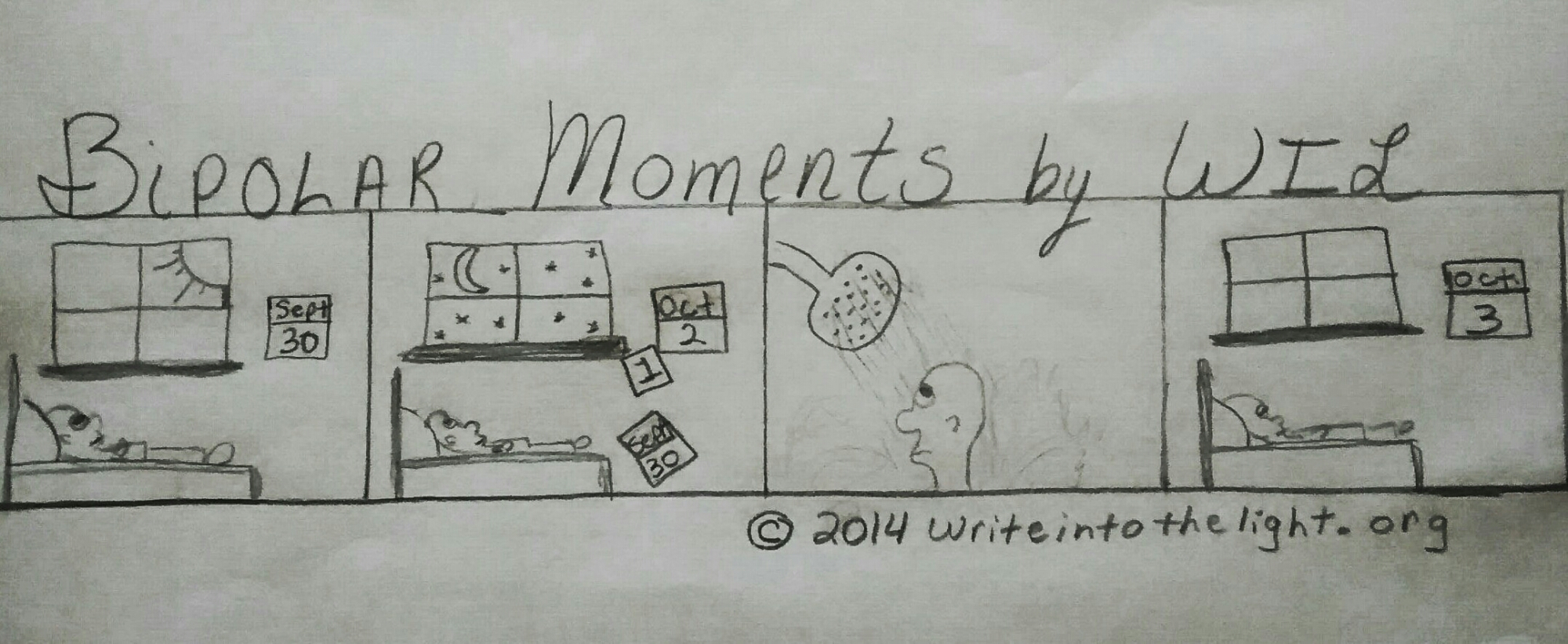
Bipolar Moments – From Diagnosis to Treatment

image

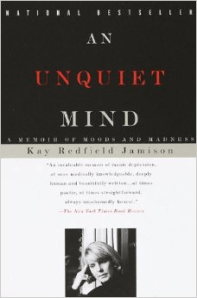
Book Review of An Unquiet Mind

an unquiet mind

I recently read An Unquiet Mind: A Memoir of Moods and Madness by Kay Redfield Jamison. It is an older book, published in 1995. In it, Jamison details her life events beginning in childhood through adulthood with Bipolar I disorder.

She focuses mainly on the mania part of her disorder and on the love relationships of her adult life, as well as on her experiences with lithium, the drug used to treat her bipolar disorder. Much detail is given to her academia life as a psychologist, and to her world travels as woman who never had children, making this memoir a bit inaccessible to me as a homemaker and stay-at-home mom.

Moreover, I have bipolar type II, have never been on lithium, nor have I experienced the extreme manic highs of Bipolar type I disorder, so I couldn’t identify with much of her story, making this book a bit of a disappointment to me and a waste of money for me.

However, if you have Bipolar I and long-term treatment with lithium, you will be able to identify with a lot of what Jamison writes.

Bipolar Moments – Weight Gain

image

Bipolar Moments – Showering

image

When Better is Not Well in Bipolar Disorder and Depression

bipolarLast week, the Depression and Bipolar Support Alliance (DBSA) hosted a forum entitled “Better is Not Well 2014”, in Chicago, IL.  I do not live in Chicago, so fortunately, they streamed the 90-minute event online where I was able to view it from home.

The purpose of the forum was to discuss the issue of raising treatment expectations; of taking patients from simply “surviving symptoms to creating thriving lives.”  The forum moderator and presenter, Allen Doederlein, opened the discussion by listing some of the negative consequences of living with residual mental illness symptoms.

When we’re not all the way well we are:


– at greater risk of relapse
– at greater functional impairment
– more likely to have co-occurring life-threatening conditions (heart disease, diabetes, etc.)
– at greater risk to die by suicide

So, with these negative risks, why do we settle for better instead of striving for wellness? Panelist, Dr. William S. Gilmer, M.D., Clinical Professor in the Department of Psychiatry at Northwestern University, who has specialized in the treatment of depression and bipolar disorder for more than 24 years, said the following.

We have lower expectations because we:


– feel like we’ve won just because we can get out of bed now
– don’t want to set ourselves up for disappointment
– don’t want to rock the boat or lose what we’ve gained by messing with the current treatment regimen
– see a little bit of mood dysregulation as the “new normal”

What does “better but not well” mean?

Dr. Gilmer suggests that lack of “wellness” means that “subsyndromal symptoms” are present. Subsyndromal symptoms are either one or two severe symptoms OR lots of mild ones. Either way, the symptoms do not meet the threshold of being considered an illness state but they are still there, causing discomfort and some impairment.

“Wellness is not just the absence of sickness.” ~ Panelist, Dr. Judith Cook, PhD, an internationally recognized authority on mental health services research

How do we go from better to well?

Panelists’, including two consumers with bipolar disorder, suggestions include:
– utilization of measurement-based outcomes in symptom evaluation to better track wellness levels
– better optimization of medication dosage and therapy frequencies
– not settling for better; striving for wellness
– discussing wellness with your psychiatrist; if he or she will not listen find a new one

What is your definition of wellness?  What would it look like or does it look like in your life?

If you this post was of interest to you, please share it.

Poetry and Risperidone

image

These pills are like duct tape across
my mouth, silencing screams
clawing to get out.

Thoughts muted; rainbows
fade to greyscale;
playground ball deflated.

Pen suspended mid-air,
stutters at best.  Spittle
on an anorexic page.

And already…
The End
like premature ejaculation.
I’m so sorry.

Smoking Cessation and Its Effects on Depression

smoking and depression

I quit smoking seven weeks ago! Seven long weeks ago. It hasn’t been easy. Anyone who has ever kicked the nasty habit can tell you, it down right sucks at times! The physical withdrawals are, of course, at their worst the first week or two, and can play havoc with your moods, causing irritability and the like. But, what about the longer-term effects smoking cessation has on moods? Are there any?

Over at about.com’s Smoking Cessation Forum, members talk about the “Icky Threes” – the first being around day 3 of going through physical withdrawals. The second icky three is around week 3 where the psychological withdrawals begin and we have to “tackle the mental side of nicotine addiction.” Finally, comes the third icky three around 3 months of quitting where the newness of the quit wears off and we start to feel somewhat depressed.

My bipolar depression started a month after quitting, and became increasingly worse as the weeks went by. So, like a good mental health patient I visited my doctor and this is what he had to say:

psychiatrist

“Quitting smoking affects the levels of dopamine in the brain, a neurotransmitter that is responsible for feelings of pleasure and well-being. Quitting smoking also affects how your body metabolizes medication, which could therefore, cause shifts in your mood.”

Makes sense to me.

He went on to say that eventually this tends to all work itself out in most people, but for those of us with mental illnesses, we may need our medication adjusted to make the transition from smoker to non-smoker a bit more tolerable. I agree.

On the other hand, according to a review of the literature done by Ragg, et al, there is almost no published research asserting that people with depression have an increase in symptoms or return of symptoms when they quit smoking. Moreover, they state that quitting smoking may even improve their mood in the long run. (Maybe they all just had their meds adjusted??? Huh? Did the researchers ever think of that?)

Quitting smoking – improving my mood? I will have to see it to believe it. Grrrr…. Stay tuned.

And in the meantime, any former smokers out there, feel free to lay some words of wisdom on me. I will treasure them!

Why Being a Hermit Doesn’t Work

We all have problems. Let’s face it: humans are problems. We create problems, we live problems, we solve problems, we prolong problems, we complain about problems, we hate problems, some of us love problems, we…well, you get the idea.

Whether your problems come from within such as in the case of an illness, or from something outside of you, such as your demanding boss, research shows that we are more likely to better cope with our problems with some kind of support from peers who have been in the same situation as we face.

support

By coping better I mean we may live happier lives, have less stress, increased psychological well-being, and decreased negative symptoms.

Now, while you might not join a support group to deal with an a-hole of a boss, you may want to consider one if you deal with chronic mental or physical illnesses, bereavement issues, weight loss or addiction issues, or if you are a caregiver for someone who is ill or dependent.

In one study (1), 82% of the 129 members of the Manic Depressive and Depressive Association were hospitalized before joining the support group. After joining, only 33% reported any hospitalizations.

In a substance abuse study (2), 180 participants with high self-help (Alcoholics Anonymous, Narcotics Anonymous) attendance rates used alcohol and/or cocaine less than half as much as did those with low self-help attendance. In a second study (3), in the 18 months following treatment, the more days the patient attended Alcoholics Anonymous self-help meetings, the longer their abstinence lasted.

In a bereavement group study (4), 197 widows and widowers over age 50 who participated in self-help groups experienced less depression and grief than the 98 nonparticipants if their initial levels of interpersonal and coping skills were low. (If their interpersonal and coping skills were high they still benefited after eight weeks of participation.)

I have been attending support group meetings for alcoholism for the past 10 years and believe I would not have remained sober for this long without doing so. Currently, I am participating in an online smoking cessation support group that is proving to be an invaluable part of my quit program. And let’s not forget this wonderful blogging community, which I consider to be a large part of my mental health “support group.” Thank YOU for that!

The greatest thing in the world to hear while you’re in the depths of your struggles, whether it is with an addiction, a mental illness, the loss of a loved one, or just a crappy day is, “I understand how you feel. I’ve been where you’re at. You are not alone.” And that, my friend, is why hermithood is not for me.

If you enjoyed this article, please consider sharing it.

Resources:

(1) Kurtz, L. F. (1988). Mutual Aid for Affective Disorders: The Manic Depressive and Depressive Association. American Journal of Orthopsychiatry 58(1): 152-155.

(2) McKay, J. R., A. I. Alterman, et al. (1994). Treatment Goals, Continuity of Care, and Outcome in a Day Hospital Substance Abuse Rehabilitation Program. American Journal of Psychiatry 151(2): 254-259.

(3) Pisani, V. D., J. Fawcett, et al. (1993). The Relative Contributions of Medication Adherence and AA Meeting Attendance to Abstinent Outcome for Chronic Alcoholics. Journal of Studies on Alcohol 54: 115-119.

(4) Caserta, M. S. and Lund, D. A. (1993). Intrapersonal Resources and the Effectiveness of Self-Help Groups for Bereaved Older Adults. Gerontologist 33(5): 619-629.

Psychiatric Medication and Heat Illness

MH900236448

There are many medications that affect the way your body cools itself during extremely high temperatures that could put you at risk for developing heat-related illnesses. Beta-blockers and amphetamines are examples. Many of these medications are ones taken by psychiatric patients, yet rarely do we hear warnings on the news to check on this population along with the elderly and children during extreme heat like I think we should.

I am on propranolol (beta-blocker), Adderall (amphetamine), Cymbalta (antidepressant), Risperdal (antipsychotic), Ativan (antianxiety), and Topamax (anticonvulsant), all of which increase my sensitivity to heat.

So, when we were boating last weekend in the 95F degree weather and stopped for lunch to which the group “leader” thought it would be a great idea to sit outside and eat, I said, “Are you crazy?!”

I didn’t really say that, but I did ask if everyone would rather eat indoors, to which the leader responded, “No way!” and everyone else followed suit by sheepishly smiling. So, I got up, recruited my husband to walk with me into the restaurant and we sat in the air-conditioning until our food was served. By this time, I was cooled off and probably saved myself from the beginnings of some heat exhaustion.

Even though my friends know I am on psych meds, they don’t get the seriousness of the side effects. It’s up to me to be assertive enough to take care of myself, and that’s what I did.

The next morning we went on a hike, and while the morning temperatures were cooler, the steep hills got my heart pumping and pores sweating. We took a 15-minute rest break on a bench by the lake.

After our rest break, I noticed my friends’ faces were no longer perspiring or flushed. I, on the other hand, felt like I was running a fever and was feeling light-headed and nauseous. I decided it would be best to call my husband to come pick me up rather than continue on the rest of the hike with them, so that is what I did.

It bums me out that I can’t keep up with my friends in the heat, but without my medications I wouldn’t be able to do anything with them regardless of the weather.

Here’s a brochure by the Ohio Dept. of MH which includes a list of some of the medications that can impair the heat response, as well as what to look for and do in the case of heat exhaustion and heat stroke.

RxList is a comprehensive drug index that provides in-depth information on probably every drug you are on. Search the medications you are currently taking to see if they make you sensitive to the sun or heat, or ask your doctor or pharmacist.

Heat illness is very serious. Make sure you know if your medication is putting you at risk. Let’s keep summer safe!

If you enjoyed this article, please consider sharing it.