Weekend Mental Health Writings – The Healing Has Begun

weekend writings

Each weekend I am going to post a mental health writing prompt. Feel free to participate by writing your response privately in your own journal at home, or by posting your response in the comments below, or by posting on your own blog and then sharing the link to your post in the comment section. Please visit those who share their writings here as well. Here is this weekend’s prompt:

Write the phrase “The Healing has begun.” and then describe yourself as if you are farther along in a recovery or healing process than you feel you are in the present moment. Imagine how you look, feel, act, talk, and relate to others. What would you be doing that you don’t do now? How would your life be different, if at all? Visualize this future self as a definite possibility for you as you continue along your healing journey. Write as your future self and encourage your present self to keep moving forward and to not to give up because things do get better, as your future self would know.

You can also follow responses to this prompt on our Facebook page.

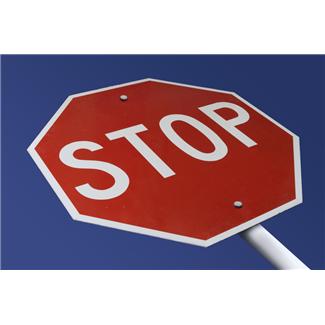
How to S.T.O.P. Anxiety

stop

When I have a stressful event coming up, such as a holiday, a trip, or out-of-town company coming to visit, I usually spend the days leading up to it preparing myself physically and mentally by scheduling very light, easy days. I make sure not to book any doctor’s appointments or other trips too far away from home. I make sure to get plenty of rest, and may even get a massage. I leave plenty of time to clean my house, pack, or prepare meals for the event, or whatever may need to be done; always asking for help from others, and always doing a little each day and not all at one time or at the last-minute.

Well, this weekend we are going out-of-town for a stressful social event, and due to circumstances out of my control and to prior commitments made I have major plans every day this week, leaving me not one day to rest my body and mind in preparation for our trip. Because of this my anxiety level is through the roof!

I fear I may not be able handle this weekend very well because I will not have had the proper time to prepare mentally and physically for it.

My anxiety plays out in funny ways. It makes me a bit hypomanic. I can’t sleep. I become obsessed with cleaning and organizing my environment, as if by making my surroundings perfect I will somehow feel more put together on the inside, too. I become irritable and agitated; I start eating poorly, and I get headaches.

I suppose I could go through the rest of the week like this OR I could S.T.O.P.

Sit still.
Take a deep breath.
Observe my feelings.
Permit them to be.

I tend to “run away” from uncomfortable feelings like fear. I used to run from them by abusing alcohol. Now, I become too busy cleaning or shopping or doing things for the kids to pay attention to my feelings, and become just as sick as when I used to drink, only you could call it an “emotional hangover” instead of a physical one.

I find that when I am able to take a conscious moment to be quiet, breathe, acknowledge what I am feeling, and allow myself to feel it, the feelings lessen, if not dissipate all together. It is when I ignore them, run away from them, or fight them that they become more intense, and sometimes unbearable.

It is now time for me to S.T.O.P.

How about you?

Mental Health Writer’s Block – a poem

The feeling comes on like words
on the tip of my tongue;
like standing at the edge of a cliff,
toes hanging over, watching the surf
crash into the reef 200 feet down.

Push just a little further.
It is right there.
Something important,
exciting, significant,
just out of reach.

What is it?

I feel the brush of its fingertips
on my out stretched hand
as I fall forward through the air,

descending,
descending;

hoping to wake up
before I hit the rocks below.

Four C’s of being a Parent with a Mental Illness

parent mental illness

I was driving my ten-year-old daughter home from her friend’s house one cool summer night. The car windows were down, and the wind whipped through our hair as the radio blasted one of her favorite songs. We sang along at the top of our lungs, laughing and screaming with delight. Just behind the excitement in her eyes I saw a touch of hesitation, a worry, and rightly so. I was manic, and while she didn’t know specifically about my bipolar disorder, on some level she recognized the signs, and it scared her…

Read the rest of my guest post today over at Dispatches From the Mad Parenthood Front.

Facebook and Its Negative Effect on Mental Health

no facebook

I gave up my personal Facebook activities last week. Note: You can still find me on Write into the Light’s Facebook Page, but, I have pushed my personal profile account to the side. Deleted the app from my phone. Haven’t checked status updates in five days which means…

I have no clue whose kid just made the honor roll, who is having a bad day at work, what everyone is having for dinner tonight, or how everyone’s nieces and nephews are doing in sports. I haven’t seen one photo-quote, inspirational or humorous. Not one recipe or emoticon from friends of friends whom I would probably not even recognize if I ran into them at the grocery store.

Top 3 Reasons to Give Up Facebook

1. The People in My House are More Important to Me than Those I Hardly Ever See

It is hard enough to filter through the minute details of my own life, let alone those of acquaintances. And that is what the majority of those on my friends list are: acquaintances. Knowing of their daily happenings makes no difference in the quality of my life. On the contrary, it wastes time and energy that would be better spent on the people with whom I actually live and on my own mental health.

2. I am a Highly Sensitive Person

Since I am a highly sensitive person who picks up on and internalizes the emotions of other people, I was finding myself being negatively effected by the sad events being shared on Facebook, from political cries to save the abused animals posts to the depressing events in people’s personal lives.

I am not saying that I don’t want to hear about the death of a dear friend’s father or the house fire of another. What I am saying is that I would rather hear about it through a phone call than on Facebook. As far as the political and social movement stuff – I don’t watch the news so as to avoid those things, so I definitely don’t want to see them in my Facebook feed.

And if you are that old friend from high school whom I haven’t seen in twenty years who has lost your job or been in an accident or gotten a divorce…I feel bad for you, but if it wasn’t for Facebook I wouldn’t even know what you look like now, let alone about the happenings in your life. No offense.

3. My Mental Health is More Important than Knowing Things About People I Haven’t Spoke to in Decades

My decision to cut Facebook out of my life came shortly after a high school classmate committed suicide, which triggered many negative emotions in me due to losing a very close friend to suicide two years ago.

After hearing about my classmate on Facebook, I grieved for a week, barely able to get out of bed some days. Grieved not really for my old classmate since I haven’t seen him in 15 years, but for my close friend all over again. It was very difficult to go through, and it could have spiraled my depression out of control.

(Thankfully, I did some mindfulness practice, talked to several people about my feelings, prayed, and wrote about it here, knowing that as long as I didn’t ignore or cover up my feelings, they would eventually pass and I’d feel better. And they did.)

However, I realized that if it wasn’t for Facebook, I never would have heard about my classmate’s suicide, and therefore, would have avoided a week of suffering because of it. No one called me, no one even directly told me about his suicide. I merely happened upon it by accident…on Facebook.

So, no more Facebook for me. How does Facebook affect your mental health? Have you ever even thought about its effects on you?
Borderline Personality Disorder and Motherhood

I bee lined down the hall into the bathroom, and shut and locked the door behind me before falling to my knees. Covering my face with my hands, I sobbed. Outside, my two and six year old girls banged on the door. “Moooommy! Moooommmyyy!” I thought, “Oh, my God! Why can’t they just leave me alone?”…

Read more of my guest post today at Healing from BPD’s website.

New Issue of Turtle Way – a journal for those with Mental Illness

Happy Friday, everyone! A new issue of Turtle Way was just published. Read it here, and have a beautiful weekend.

Turtle Way Logo

What’s Good About Depression?

depression

Researchers say there are some positives to having depression. I am not so sure I agree with them. Let’s take a look at what they are saying:

  • Depression makes you a better problem-solver because you need to figure out (usually with the help of a therapist) how to deal with your existing symptoms and the problems they cause in your life.

My thought on this is if we knew how to deal with our problems in the first place, many of us wouldn’t have became depressed to begin with.

  • Depression forces you to learn how to cope, again, usually with the help of a therapist or professional of some sort. Admittedly, researchers say that those who are depressed often initially choose poor coping mechanisms such as drinking.

So what I am hearing is that many of us had poor coping mechanisms which probably increased our chances of becoming depressed in the first place. I don’t see the positive in this.

  • You have better relationships because those who are depressed become better, as part of their healing process, at prioritizing what is and who is important in their lives.

Again, this suggests that before professional help, we did not have the ability to prioritize well. I know this was the case for me as I put financial security above my relationships and my own mental health which lead to a breakdown that almost cost me my life.

  • Depression can make us more compassionate to others going through hard times.

This I totally agree with, hands down! You can’t really understand what a person is going through unless you have been there yourself.

  • We are better at dealing with stress after going through the process, with a therapist, of figuring out what went wrong and how to avoid or manage future stressful times.

While this is true, again, it points to the fact that we did not deal with stress very well before the depression took over.

  • We are more realistic because we better understand what we have control over and what we don’t in life.

Again, we do now, but not before the depression took hold.

  • We can detect deception because we tend to have a more “realistic” view on life.

Realistic? How about pessimistic or cynical – those would be my choice of words.

Don’t get me wrong – I love that research is trying to say there are benefits to having depression. It is all about looking at the glass half-full, I suppose. But, if your depression is anything like mine, there wasn’t any water in the glass to begin with. What are your thoughts on this?

River of Emotions

river

When I am feeling sad or depressed, or anxious and afraid, my first instinct is to get rid of these emotions either by doing something unhealthy like smoking or overeating, or something productive like cleaning the house or exercising. The goal in both cases is to block out the emotion; to ignore it; to purge it from my system; to eradicate it.

What if rather than trying to kill the emotion, I sat with it; let it flow through and around me, believing all the while I am safe, because it is my actions, not my emotions, that have the potential to harm me.

I find that when I do this, the emotion tends to dissipate on its own. It’s as if giving it recognition somehow facilitates its disappearance.

Today, I will acknowledge the emotions within me. I will validate their existence, keeping in mind that feelings are not facts. They cannot harm me. Like a river they will flow towards me, through me and then out of me, and I will know peace.

The Do’s and Don’ts of Mental Health Blogging

newspaper

The National Institute on Mental Health (NIMH) news reports that over 50 research studies worldwide have found that the type of news coverage on suicides makes a difference in the influence it has on the suicide rates of its viewers who are at risk for it.

The longer and the greater the coverage of a suicide story, the more likely vulnerable individuals may commit suicide themselves. Explicitly describing the suicide method and using dramatic headlines are big no-no’s as well.

However, “careful” reporting on suicides can change public misperceptions and dispel myths, thereby encouraging those at risk to seek help.

What does this mean for us mental health bloggers?

blogger

While our audience may not be in the millions like network television stations or hundreds of thousands like those of major newspapers and internet news sites, I think we should still be responsible in how we describe our own struggles with mental illness and our own thoughts on self-harm and suicide.

I have seen bloggers on either end of the spectrum here. On one hand, some are overly cautious and post “trigger warnings” on most everything they write or vlog about. Trigger warnings are little blurbs that say, “Hey, I am getting ready to write or talk about something that could trigger negative symptoms in you, so continue reading/listening at your own risk.”

I like trigger warnings because sometimes I am in a bad space with my own mental illness symptoms to where listening to someone talk about their self-abuse habits or their detailed thoughts of suicide may cause me some sleepless nights at best, and at worst, may tempt me to entertain such ideas myself.

I have also come across bloggers who write about or post vlogs about the details of their childhood abuse, which is a huge negative trigger for me. For those of you who put trigger warnings on this type of stuff, I thank you, because I will skip those parts entirely. Maybe some people want to read about it; maybe it helps others, but for me it triggers panic attacks. In my opinion the details of such events are best dealt with in therapy or within your own private journal.

Now, I am not proposing we don’t mention the fact that the abuse happened at all. If it did, it is important to validate the horrifying affect it had on us. I am merely suggesting that the minute details of the specific acts themselves be kept out of public posts. To me, the negative effects on the reader far outweigh any positive ones.

Another hot topic in the mental health blogosphere is self-harm behaviors. Some bloggers not only name the behavior, which is acceptable in my opinion, but go on to detail why they do it, what it feels like and looks like, and the thrill or release or whatever “positive” thing they are getting out of it. I understand it works for many people (I used to be one of those individuals; I get it!) However, sensationalizing it, as the NIMH states, only encourages others to do it, and that is not what we want.

Based on NIMH’s suggestions, I propose that we bloggers:

  • Help reduce the risk of contagion by including posts or links to treatment services, warning signs and suicide hotlines.
  • Include stories of hope and recovery; information on how to overcome self-harm behaviors and cope with suicidal thinking.
  • Focus on solutions rather than just the problems.

What suggestions would you have for mental health bloggers?  Share them in the comment section below.

For a side-bar list of suicide warning signs you can include in your posts visit http://reportingonsuicide.org/warning-signs-of-suicide/

If you or someone you love is suicidal you can call the U.S. National Suicide Prevention Lifeline at 1-800-273-TALK (8255), a free, 24/7 service that can provide support, information and local resources. For those outside the U.S., visit http://www.suicide.org/international-suicide-hotlines.html to find suicide hotlines in your country.