Co-occurring Disorders

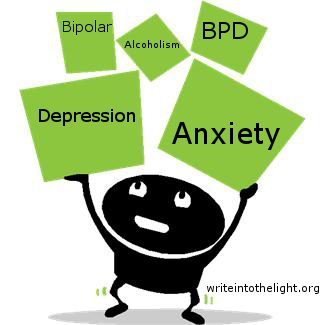
juggle

I found this helpful article on causes and solutions of having dual diagnoses (substance abuse AND mental illness.) I wanted to bring to you some interesting facts and highlights. To view the handout in its entirety click here to download the Hazelden Foundation’s pdf.

Factors involved in the development of psychiatric disorders:

1. Vulnerability (determined by genetics and early life experiences)
2. Stress (challenges faced in life)

Factors that can help reduce symptoms and relapses:

1. Abstaining from alcohol and drug use

“Avoiding alcohol and drug use can reduce biological vulnerability in two ways. First, because substances affect the brain, using alcohol or drugs can directly worsen those vulnerable parts of the brain associated with psychiatric disorders. Second, using substances can interfere with the corrective effects of medication on vulnerability. This means that somebody who is using alcohol or drugs will not get the full benefit of any prescribed medications for his or her disorder, leading to worse symptoms and a greater chance of relapses.”

2. Take prescription medications according to your doctor’s orders
3. Learn to use positive coping skills
4. Develop social support systems
5. Engage in meaningful activities

Which factors are you incorporating into your life to help reduce symptoms and prevent relapses? Which factors do you need to add?

The Sucky Part of Dual Diagnoses

juggle

Like many of you, I have multiple mental illness diagnoses…ones in which symptoms overlap to the extent that I don’t know what I am experiencing sometimes.

Is it anxiety or hypomania? I tend to go into cleaning frenzies during both states. Is it depression or hypomania? I tend to neglect my self-care during both states? Is it bipolar or borderline personality disorder symptoms? Frequent mood swings and anger outburst appear upon exacerbations of both of these illnesses for me.

How do you distinguish between different diagnoses? Does making the distinction really matter?

For me it does…anxiety means a change in that med while mania means a change in another one. My doctor increased my antidepressant at one point in order to treat (what we thought was) my anxiety, and the change threw me into rapid cycling bipolar symptoms (a very scary place to be.)

Cycling mood swings calls for a look at my mood stabilizer OR maybe I just need to refocus my efforts on using DBT skills (Dialectical Behavioral Therapy skills are clinically effective for treating Borderline Personality Disorder.)

Depression and self-pity…is it clinical – meaning do I need a med adjustment or is it something that a few extra counseling sessions or sobriety support group meetings would alleviate?

I am grateful there are so many avenues of support and treatment for all of my disorders – counseling, support groups, skills, medications (both traditional and alternative.) However, knowing which one needs to be tweaked here and there can be quite frustrating.

Have you ever experience the frustration of having two or more diagnoses whose symptoms overlap? How do you distinguish between them or how do you cope with it? Please share. I really could use your insight.

Thanks.

hugs,
Wil

What is Your Biggest Fear?

20130311-090653.jpg

Is Mental Illness Popular?

micro soft image

Is mental illness a hot topic? I am not sure, but you all have been doing an awesome job at reading and sharing my posts because according to blog industry experts, the more popular your blog becomes the more s-p-a-m it is likely to get. Thank God for Akismet!

Next month is Write into the Light’s 2-year blogiversary!

another micro soft image

…which has me reflecting on my current goals for this blog as well as for Turtle Way’s blog (Turtle Way is a compilation of works submitted by artists and writers who have mental illness or have been affected by others with mental illness.)

Current Goals (in no particular order:)

  • I toyed with the idea of stopping Turtle Way’s publication until I reviewed the recent stats and saw that the issue released back in January is still receiving a great number of views. Yay! I love that people continue to (hopefully) gain strength and support from the artists and writers published there.
  • This brings me to Write into the Light’s original and primary purpose which is to offer understanding, strength and hope to all persons sufferring from mental illness.
  • In that light (no pun intended 🙂 ), I am going to place a lot of time and effort this year into finding a publisher for my daily meditation book. The daily reflections are written specifically for persons who have mental illness.
  • The newest and final goal I have to share with you, thus far, is to assemble a list of subscribers who would like to be part of a pilot audience for my book. This would involve receiving sneak-peeks of my daily reflections and providing feedback as necessary on how they affect you…if they help you cope with your illness or not…if they make sense to you or not…etc.

I have yet to finalize the logistics on this, but I am thinking of doing it either by email or password protected posts.

If you are interested in being a part of this pilot study and are willing to provide honest feedback (like serious critique) on how helpful or not-working-for-you-at-all these writings are, please email me at writeintothelight@live.com or leave a comment below.

A Quick Mental Health Experiment to Try Now

Up for an experiment? Try this out and tell me what you think.

20130305-231839.jpg

Meet Your True Being

You are NOT your mental illness.
20130305-223302.jpg

10 Simple Ways to Beat the Winter Blues

bluesIf you are like me then winter is not your friend. The cold, dreary days tend to drag on, as cabin fever sets in and depression, boredom, lack of motivation and lethargy begin to choke the life out of me.

I came across this entertaining, well-written article on Psych Central by author, Therese J. Borchard. Borchard lists these suggestions to help you battle the winter blues.

1.  Be of service to others

I started cooking new-to-us, healthy recipes as my husband and I committed to losing weight before bathing suit season arrives. I feel like I am doing something extra special for my family as I spend an hour or more each night chopping, dicing, and slicing fresh fruits and vegetables, and preparing scrumptious home-cooked meals. The weekly planning and execution of such dishes (compared to a box meal or popping a pizza in the oven) alone helps to battle my boredom as well.

2.  Join a gym

I did this – Yeah!!! The problem?  I never went! A gym is a great idea for some, but not for me. Because of my anxiety, I have a hard enough time getting out of the house for essentials like doctor’s appointments. I am more successful with a mile walk around the neighborhood where I can take my time and hide behind my sunglasses rather than going to the gym and risk having to interact with anyone.

3.  Use a light lamp

I do this, and it helps a lot. After 45 minutes in front of my light, I feel energized and ready to get off the couch and do something productive (like make those dinners.) I use my light twice a day, once in the morning and once in the late afternoon. It really does work.

4.  Wear bright colors

I am an earthy kind of girl, wearing lots of browns, blacks, and greens.  Neutral colors fill my closets, so I have not tried this suggestion out, but it makes sense that bright colors could lift your mood.

This morning, I walked into a new doctor’s office and the walls were painted a dreamcicle, creamy orange, and adorned with bright impressionist paintings.  It was a breath of fresh air.  I literally felt calmer and happier as I sat there, surrounded by these bright, yet soft, colors.

5.  Force yourself outside

I step outside when I let the dogs out, mainly to have a cigarette, but hey at least I am getting out!  I also go for walks outdoors.

6.  Hang out with friends

This is a tricky area for me.  I meet with a small group of women once a week and overall, it helps my mood.  Having face-time with close friends definitely enhances my emotional well-being, but too much of it drains me physically and mentally.  Migraines often follow visits that last too long.  My limit for any type of social situation is about two hours.

7.  Head south

We have always taken our family vacations during the summer months when the kids are out of school.  Last year, however, I convinced my husband to head south during the month of December specifically for this reason – to battle my seasonal depression.  It worked…for that month anyway.

We will probably do it again next year, but will shoot for January or February instead.  The December trip was great, don’t get me wrong, but I think my depression really takes a nose dive after the holidays, so a trip in January would be more ideal.

8.  Learn something new or start a home project

This winter I have been editing our home videos.  I even splurged and bought a software program to add fun effects to them.  It takes me several hours to do a ten minute video, but the results are very cool and satisfying.

Creative projects like video editing, painting, and photography keep my mind off the bleak weather conditions.  When my hands are idle, my mind wanders and that is never a good thing for me.

9.  Limit sugar intake

Sugar-crashes and weight gain….’nuf said.

10.  Take Omega-3’s

My suggestion on this is to talk to your doctor.  I take them, but I don’t feel they make a huge difference (if any at all) on my emotional health.

What do you do to battle the winter blues?  Share your tips in the comments.  Also, while you’re here, I invite you to subscribe to this blog.  Thanks and have a blue-free day.
Let’s Talk About Mental Illness

lets talk

A single conversation with a wise man is worth a month’s study of books. ~ Chinese Proverb

Today, we may keep our thoughts and worries to ourselves. We may search for explanations within the craziness of our minds. We may consult books and the internet to find answers for why we feel anxious, depressed, and hopeless, and how to fix it. We may suffer alone in the madness, telling ourselves that no one understands how we feel, that we are unique in the torture we suffer.

Or we can be open-minded to the possibility that like us there are others who experience the pains of mental illness. We can seek out those who have been where we are; ask them about their experiences and how they cope. We can lean on others for strength.

Sometimes the problem is not that we don’t have the answers but that we aren’t willing to discuss the questions with another human being. We often and unknowingly perpetuate our symptoms by searching for peace on our own.

It is in reaching out, asking for assistance, and making ourselves vulnerable, if only by talking to an understanding and trustworthy person about our thoughts and feelings, that we find peace. If I surround myself with others who understand and support me, I will survive. Afterall, we certainly won’t be crazy at the same time! I will lean on others when I need to and they will lean on me in turn.

Today, I will talk to someone about what is going on inside of my head instead of isolating, and I will know peace.

Need someone to talk to? Need someone to listen who understands? I get it. Leave a comment and let’s share about it.

To Be Normal

20121006-225953.jpg

Mental Health Goal #1