The Do’s and Don’ts of Mental Health Blogging

newspaper

The National Institute on Mental Health (NIMH) news reports that over 50 research studies worldwide have found that the type of news coverage on suicides makes a difference in the influence it has on the suicide rates of its viewers who are at risk for it.

The longer and the greater the coverage of a suicide story, the more likely vulnerable individuals may commit suicide themselves. Explicitly describing the suicide method and using dramatic headlines are big no-no’s as well.

However, “careful” reporting on suicides can change public misperceptions and dispel myths, thereby encouraging those at risk to seek help.

What does this mean for us mental health bloggers?

blogger

While our audience may not be in the millions like network television stations or hundreds of thousands like those of major newspapers and internet news sites, I think we should still be responsible in how we describe our own struggles with mental illness and our own thoughts on self-harm and suicide.

I have seen bloggers on either end of the spectrum here. On one hand, some are overly cautious and post “trigger warnings” on most everything they write or vlog about. Trigger warnings are little blurbs that say, “Hey, I am getting ready to write or talk about something that could trigger negative symptoms in you, so continue reading/listening at your own risk.”

I like trigger warnings because sometimes I am in a bad space with my own mental illness symptoms to where listening to someone talk about their self-abuse habits or their detailed thoughts of suicide may cause me some sleepless nights at best, and at worst, may tempt me to entertain such ideas myself.

I have also come across bloggers who write about or post vlogs about the details of their childhood abuse, which is a huge negative trigger for me. For those of you who put trigger warnings on this type of stuff, I thank you, because I will skip those parts entirely. Maybe some people want to read about it; maybe it helps others, but for me it triggers panic attacks. In my opinion the details of such events are best dealt with in therapy or within your own private journal.

Now, I am not proposing we don’t mention the fact that the abuse happened at all. If it did, it is important to validate the horrifying affect it had on us. I am merely suggesting that the minute details of the specific acts themselves be kept out of public posts. To me, the negative effects on the reader far outweigh any positive ones.

Another hot topic in the mental health blogosphere is self-harm behaviors. Some bloggers not only name the behavior, which is acceptable in my opinion, but go on to detail why they do it, what it feels like and looks like, and the thrill or release or whatever “positive” thing they are getting out of it. I understand it works for many people (I used to be one of those individuals; I get it!) However, sensationalizing it, as the NIMH states, only encourages others to do it, and that is not what we want.

Based on NIMH’s suggestions, I propose that we bloggers:

  • Help reduce the risk of contagion by including posts or links to treatment services, warning signs and suicide hotlines.
  • Include stories of hope and recovery; information on how to overcome self-harm behaviors and cope with suicidal thinking.
  • Focus on solutions rather than just the problems.

What suggestions would you have for mental health bloggers?  Share them in the comment section below.

For a side-bar list of suicide warning signs you can include in your posts visit http://reportingonsuicide.org/warning-signs-of-suicide/

If you or someone you love is suicidal you can call the U.S. National Suicide Prevention Lifeline at 1-800-273-TALK (8255), a free, 24/7 service that can provide support, information and local resources. For those outside the U.S., visit http://www.suicide.org/international-suicide-hotlines.html to find suicide hotlines in your country.

How to Deal With Complex PTSD Triggers

Dealing with PTSD Triggers

Current Symptoms

Racing thoughts. Obsessive compulsive behaviors, such as cleaning, organizing, exercising. Increased negative coping behaviors, such as overeating, smoking, and drinking. Physical pains, such as upset stomach, migraines, muscle aches and fatigue. Early morning waking. Increased irritability. Forgetfulness. Tightening chest. Racing heart rate – literally hearing my heart pounding in my ears. Shallow, rapid breaths. Dissociation or feelings of having an “out-of-body” experience.

These are common occurrences for those of us with anxiety disorders. This week, I experienced all of them (except for the drinking.) Only after forcing myself to sit down long enough to do some journaling was I able to identify the source of my anxiety…

Triggers

There is always a cause for anxiety. Did you know that? It just doesn’t come because “we are crazy.” There is always a root cause, and it serves me well to sit down and face the fear of finding out what it is, because once I realize what is causing it, I can deal with it, and the symptoms will subside.

Sometimes finding the cause isn’t as simple as it can be with straight-forward Post Traumatic Stress Disorder symptoms, which are caused by specific events such as accidents and natural disasters. Sometimes the events are actually an accumulation of events occurring over a period of months or years, where the person is subject to long-term, repeated trauma as in the case of child abuse. In such cases, the term “Complex PTSD” is often used even though it is not officially a diagnosis included in the Diagnostic and Statistical Manual of Mental Disorders (DSM) (at the time of this writing.)

This week my three-day anxiety attack which culminated into a full-blown panic attack was triggered by a few things. First of all, I shared my BPD story last weekend, which set my anxiety level higher than normal, but in and of itself didn’t cause me too much stress. However, add that to the fact that on two different occasions last week I unexpectedly ran into different individuals with whom I went to high school, and then the kicker was an unplanned evening of looking through my high school yearbooks (at my daughter’s request.) She wanted to see what her dad and I were like back in the day, and I didn’t think twice about taking a trip down memory lane. Next time I will.

Past Trauma

High school was a very traumatic time for me. My parents’ alcoholism was at its peak; dysfunction and emotional neglect were at an all time high in our home. Memories of those years are clouded with my own drunken states filled with self-harm behaviors and untreated bipolar and borderline personality disorder symptoms.

Before going to bed that evening, I made a passing comment to my husband about feeling a little anxious after looking through those yearbooks, and then I thought nothing more of it.

Three days later, I had my first panic attack in many, many months.

After quickly figuring out the cause of my anxiety (due only to writing about my feelings, which is why “Write into the Light” is my mantra) I began to ask myself many questions:

  • Is knowing the cause of my anxiety enough to make it go away?
  • Do I need to worry that these memories triggered me the way they did?
  • Is this a sign that I need to work out some more stuff in therapy with my counselor, who I haven’t needed to see in six months now?
  • Does this mean I am not healed all the way like I thought I was?

Healthy Coping Skills

I was a mess at this point. But, here are the skills I used to cope with my state of mind at the time. My hope in sharing these is that it will give you some ideas to try when you find yourself experiencing extreme anxiety.

First, I left messages for two friends who I knew would understand, and I also left a message for my therapist.

Next, I tried sitting with and observing my feelings, thoughts, and body sensations without judgment; trying not to push anything away nor hang onto anything. Just noticing and observing as if I was an outsider looking in.

I tried soothing myself by rubbing scented lotion on my arms and hands, which didn’t help much.

Then I decided to call my doctor to get an emergency refill of my PRN anti-anxiety medication. Luckily, the pharmacy filled it in ten minutes, and also luckily, my husband was due home for his lunch break and was able to pick it up on his way.

While waiting, I wrapped myself in a warm blanket and sat in a fetal position on the couch in a quiet room. This helped calm me immensely.

I also said some simple prayers.

I took my medication at the same time my therapist called back. After telling her what happened, she said that I might need to try some “exposure therapy” meaning that I look at the yearbooks when I am in a good place emotionally and mentally, and even then only for a short time, and maybe not with my young daughters.

Integration

I made the comment to her that I thought I had gotten past this part of my life, that my negative feelings about it were gone. She said they are always going to be there; that the goal is not to get rid of the bad memories, which is impossible, but to instead integrate them. Integration is the goal. (Integration: The organization of the psychological traits and tendencies of a personality into a harmonious whole.)

She also said that I should try to dig up a few good memories from that time. She said they are probably there, but are just overshadowed by the bad ones. At first I didn’t think she was right, but then I made a conscious effort to get out of my black and white/all or nothing thinking, and started thinking dialectically – where good and bad memories can co-exist. And guess what? She was right!

Discussion Questions:

When you’re anxious do you dig deep to find out what the root cause is? It may be something more than what it appears to be on the surface.

What physical symptoms do you have when you are feeling anxious? Do you take the time to sit and notice your body’s sensations and your mind’s thoughts during these times? Why or why not?

Subscribe to this blog by entering your email in the top right side bar above or if you’re on the mobile site, leave a brief comment and check the box that says, “Notify me of new posts via email.”

You can also connect with me on Twitter @writeintolight

Until next time…

Mental Illness and Anonymity

mental illness anonymity

There are several reasons why I choose to maintain my anonymity on this mental illness blog.

The primary reason is to avoid hurting family members. Many of my mental illness symptoms, in particular my anxiety, are directly related to childhood events. For me to publicly identify myself while revealing facts about my upbringing would be harmful to my family members.

Even though there are benefits of adding my face and real name to the content of this blog, such as increased credibility and to support the cause for an end to the mental illness stigma, I will not do so at the expense of another’s peace of mind and privacy.

The second biggest reason I choose to maintain my anonymity is to maintain a sense of humbleness to my message. Money, power, and prestige are not my goals. Sharing what it is like to have mental illnesses and what I do to strive for healing and peace are my goals, with the hope to inspire others struggling with similar issues.

My greatest wish is that no one ever feels like they are unique. People need to know that they are not the only ones who feel the way they do, that someone else understands how they feel and has gone through what they are going through.

Another reason I choose to maintain my anonymity is because just as I would not announce at my job or highschool reunion or in a restaurant, whether it be to a large group of people or just one or two persons I didn’t know well, that I have a mental illness, why should I do so online?

I tell those whom I am close to, to those whom I trust, when the time is appropriate and when I believe it would be helpful to the situation. Anything beyond this is not necessary for me.

This is what works for me. It may be the same, or different, for you. What are your thoughts on online anonymity and mental illness?

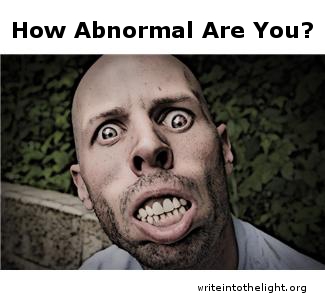
How Abnormal Are You?

abnormal mental illness

“The real hopeless victims of mental illness are to be found among those who appear to be most normal…Many of them are normal because they are so well adjusted to our mode of existence, because their human voice has been silenced so early in their lives, that they do not even struggle or suffer or develop symptoms as the neurotic does. They are normal not in what may be called the absolute sense of the word; they are normal only in relation to a profoundly abnormal society. Their perfect adjustment to that abnormal society is a measure of their mental sickness. These millions of abnormally normal people, living without fuss in a society to which, if they were fully human beings, they ought not to be adjusted.”  ~ Aldous HuxleyBrave New World Revisited

This quote kind of blows my mind. If I understand it correctly, Huxley is saying that those who are normal, or well-adjusted to life, are actually the abnormal ones, and those of us (myself included) who are “neurotic” or according the psychoanalytical theory have a:

“poor ability to adapt to one’s environment, an inability to change one’s life patterns, and the inability to develop a richer, more complex, more satisfying personality” as evident by mental illnesses such as depression, acute or chronic anxiety, obsessive–compulsive tendencies, specific phobias, such as social phobia, arachnophobia or any number of other phobias, and some personality disorders: paranoid, schizotypal, borderline, histrionic, avoidant, dependent and obsessive–compulsive

are the normal ones.

What do you think about this? Do you agree with this view of what is normal versus abnormal? Do you think that those of us with mental illness are more sensitive to the tragedies and injustices of the world? If so, why are those who aren’t as sensitive considered to be “normal” in the sense that they are mentally healthier than those of us with mental illness? Who are really the sick ones here?

Please share your thoughts in the comments below. Any type of discussion this quote may spark is appreciated.

Now On Facebook

Hey, Guys. I just set up a page for Write into the Light on Facebook. Please go there now and LIKE. Thanks so much!

xo,
WIL

Let’s Talk About Mental Illness

lets talk

A single conversation with a wise man is worth a month’s study of books. ~ Chinese Proverb

Today, we may keep our thoughts and worries to ourselves. We may search for explanations within the craziness of our minds. We may consult books and the internet to find answers for why we feel anxious, depressed, and hopeless, and how to fix it. We may suffer alone in the madness, telling ourselves that no one understands how we feel, that we are unique in the torture we suffer.

Or we can be open-minded to the possibility that like us there are others who experience the pains of mental illness. We can seek out those who have been where we are; ask them about their experiences and how they cope. We can lean on others for strength.

Sometimes the problem is not that we don’t have the answers but that we aren’t willing to discuss the questions with another human being. We often and unknowingly perpetuate our symptoms by searching for peace on our own.

It is in reaching out, asking for assistance, and making ourselves vulnerable, if only by talking to an understanding and trustworthy person about our thoughts and feelings, that we find peace. If I surround myself with others who understand and support me, I will survive. Afterall, we certainly won’t be crazy at the same time! I will lean on others when I need to and they will lean on me in turn.

Today, I will talk to someone about what is going on inside of my head instead of isolating, and I will know peace.

Need someone to talk to? Need someone to listen who understands? I get it. Leave a comment and let’s share about it.

The Princess, the Pea and the Holidays

Rockefeller Center Christmas tree

Rockefeller Center Christmas tree

The holidays bring with them extra family, travel, food (usually the not-so-healthy kind), money-spending, crowds, and stress. I don’t know about you, but I have a hard enough time managing my stress on a “normal” day.

I require a low stimulating, non-demanding environment in order to remain relatively sane. I call it the “Princess and the Pea syndrome.” If you recall the children’s story written by Hans Christian Andersen, there was a princess sleeping on a dozen or so soft mattresses, and the only way to know if she was a true princess was to test her physical sensitivity by placing a pea under the bottom mattress to see if she felt it while trying to sleep.

If you are like me and the princess, then keep reading as I share the ways in which I limit stimuli to my hypersensitive system, thereby managing my holiday stress:

Family Events:

Show up late. Leave early. Tell them you have diarrhea. Who’s going to try guilting you into staying if you say you have diarrhea? Ha ha! Just kidding – don’t lie.

What I say is that I am not feeling well, which is true if my body and mind have reached their limits. Fatigue, tension in my neck and shoulders, headaches, and chills or sweating are all signs that I am beginning to experience anxiety and it is time for me to scadaddle.

Travel:

If in the car or airport for any length of time, make sure you have ways to block out extraneous sensory input, which to me is anything beyond someone honking their horn at you for weaving into their lane, or at the airport, the attendant calling for finally boarding on your flight.

Some ways I block out extra stimuli when traveling include listening to relaxing music through earphones. Sometimes I leave the ear buds in even when there is no music playing because strangers or even my kids are less likely to make small talk or bother me if they think I am listening to something.

Bring sunglasses! I don’t have a problem just shutting my eyes no matter where I am – in the airport, a restaurant, or on someone’s couch. Closing my eyes, even if just for a minute or two, really keeps me from becoming visually overstimulated.

Food:

Eat a carrot for every cookie you inhale. Do I do this? No. But it’s a good idea, right?

Shopping crowds:

Online, baby! Unless your lap is overpopulated.

I hope some of these suggestions help you manage your holiday stress this week. What do you do to decrease stress during the holidays?  Please share in the comment section below.

Thanks,
Wil

P.S. December 31, 2012 is the deadline for submissions to Turtle Way‘s next issue. Turtle Way is Write into the Light’s online mental health journal. See submission guidelines here.

Mental Health Goal #1

How to Stay Happy When Others are Fighting

When the conflict of others does not directly involve me, am I able to stay out of it? At times, it is difficult to let the adults in my life fight their own battles. Also, it is harder to distance myself emotionally than physically.

Physically, I can go for a walk or a ride, sit outside, visit a neighbor, put on head phones and listen to relaxing music, or take a break from my surroundings in some way.

Emotionally, however, my thoughts obsess over the conflict, causing anxiety, depression and fear to overwhelm me.

If I am able to expel these thoughts from my mind in a constructive way, like talking about them with a trusted person who is a neutral party, the negative feelings leave me. Then I am able to detach with love from those waging amongst themselves.

I have the choice to try a different action; to walk a different path. Today, I can choose to know peace.

Keep Moving, Keep Changing – a poem

Who knew that clouds pass over
only to return so frequently –
a constant state of motion
only when the wind blows?

Who knew that scum gathers
in pond water; its slime slippery,
spotted with rot on both
dark and sunny days?

Who knew that inertia
holds the key to living,
and dying,
in the utmost subtle way?

I didn’t know, but
now I do. Do you?