5 Reasons I Hate Leaving My House

mouse-603208_640

Anxiety is a bitch! It has been several years since I have had a full-blown panic attack – the one where you can’t breathe and you think you are dying – but on a regular basis I have bouts of anxiety where my heart races, I get a bit short of breath, and I fear I may go into panic mode. These smaller anxiety attacks, along with some low levels of depression, are enough to make leaving the house a big chore for me.

Top 5 Reasons I Hate Leaving My House

1) Showering takes more energy than I have on most days. And then there is the fixing of the hair, and OMG! make-up, and God-forbid getting out of my pajama pants. I mean, come on…that’s a lot to ask of a girl. By the time I do all of that I am ready for a nap!

2) Driving is stressful. I live in a busy metropolitan area and traffic is heavy. Patience, concentration, and sometimes aggressiveness are needed to safely navigate the roads around here – all of which I basically lack.

3) Social anxiety. Leaving the house often means going to some sort of social event, and I don’t feel comfortable around other people because small talk is like nails on a chalk board to me! I’m definitely an introvert and prefer to be alone or with my immediate family. Also, if it is a larger party, the noise and extra stimuli is overwhelming to my senses.

4) Fear of public places. Leaving the house also often means going to the store or some other public venue where crowds gather and strangers abound. Yikes! What if I see someone I know? What if I get mugged? Kidnapped? How claustrophobic I feel standing in lines and squeezing down isles. How it makes me lose my breath to bump into others or feel them in my physical space! And again, the noises, lights, and movement are all overwhelming to my senses.

5) Agoraphobia. Agoraphobia is an intense fear and anxiety of being in places where it is hard to escape, or where help might not be available. This would explain why if my husband is with me, I feel much less anxious when out of the house. He drives, I stick by him during parties, and follow him through the stores. Now if only he could shower for me. 🙂

Although I hate leaving the house, I do force myself to on a regular basis. Sometimes I have to take an anti-anxiety pill before I leave and sometimes I don’t. I think it is important for me to desensitize myself to these stressful situations as much as I can, because if I don’t my anxiety will only get worse.

I also grade the tasks in a way that will make them more successful for me. For example, when I go to the grocery store I only get a few items at a time, and leave the big list for my husband (he’s the best!) When my daughter has a 3-day sports tournament in a loud crowded gym, I will only attend one or two of the days. When going to a social event, we will only stay a short while or not go at all if I am not feeling up to it. We go out to eat early in the evening (with all the old people) so we don’t have to wait for a table. These are just a few examples of how I compensate for my increased anxiety.

As you can see, there are ways around anxiety. It doesn’t have to make you a prisoner of your own home. Although, sometimes it will. But it doesn’t have to all of the time.

How does your anxiety limit you, and what are some ways you have found helpful to decrease these limits?

How to Use Media to Improve Your Mental Health

If you are like me, watching too much news can wreak havoc on your mood. I begin to think our world is nothing but an evil, horrible, negative, cesspool of a place to live. I lose hope in humanity quickly as I hear story after story of war, murder, robbery, rape, kidnapping, and abuse. I become cynical, despondent, and downright depressed. Therefore, I limit my exposure to the news.

I noticed that my local news stations post the more horrific stories on their Facebook news feed than they broadcast on television, so I stopped following their pages. This has helped my mental health tremendously since I check in on Facebook multiple times throughout the day versus watching a televised newscast only once per day.

unlike

5 Types of Media That Have a Positive Affect on My Mental Health

1.  Blogs that offer hope

I enjoy reading mental health blogs written by those who have struggled or are struggling, and are trying to get better. It is uplifting to read stories of perseverance, effort, compassion, and faith.

There are many bloggers out there who write only of their destructive ways; who are stuck in their illnesses and show no signs or interest in wanting to get better. They do not seem to have the insight or awareness into the things that they can change, and that is ok. They aren’t there yet, and I am not judging them for that. However, their negativity and anger is something I have to steer clear of for my own mental well-being, just as I have to with people in real life as well.

2.  Google Images

Sometimes when I am feeling down or just bored I will search positive keywords on Google and browse through the images that come up. I often add the word “quotes” to my keyword and then many photos of positive affirmations and sayings appear. For example, this one is from searching the words “friendship quotes”:

imagesOE1RL31T

And of course, you can find just regular photos of anything you can think of that makes you happy, including all the puppy and kitten pictures you could want!

dog-64466_640

dog-388332_640

kitten-329219_640

kitty-551554_640

3.  Pinterest

I use Pinterest because it is a great way to save all of those images you find. That way you can come back to them again and again to boost your spirits whenever you need to. Plus, on Pinterest you have the advantage of having a million other people’s search results at your finger tips on the same topic you are interested in.

4.  YouTube Music and Photo Videos

Listening to your favorite music on any media device can help improve your mood.  You can find many songs on YouTube as well.  What I like to use YouTube for is to find non-mainstream type music that helps my mood, such as relaxation or meditative music.  Music that I wouldn’t necessarily buy, but that I might want to listen to every once in a while to help calm my nerves on a particularly stressful day.

I also like searching for photo-music slide shows.  They can be very soothing.  If you would enjoy photos of wooded areas, this one is nice.

5.  Twitter

If you search the hashtag “#affirmation” on Twitter, you can read all kinds of positive messages that will help lift your mood.  I know it helps me stay in a good frame of mind.

Do you know of any other ways to use media to improve your mental health?  Please share them in the comments below.

Comorbid Bipolar and Anxiety Disorders

sad-72214_640

The largest treatment study of bipolar disorder conducted to date found that more than half the study participants with bipolar disorder also had a comorbid anxiety disorder.*

I have been experiencing what I thought were hypomanic symptoms – decreased need for sleep, restlessness, increased productivity/creativity, project-oriented tasks, irritability, OCD behaviors, agitation, and distractibility.

However, since my over all mood was not elated or euphoric but rather anxious, my psychiatrist said I was experiencing anxiety and not mania. I do tend to cope with anxiety by “keeping busy” to distract myself and to work off all of that “nervous energy.” And I get a bit obsessive with cleaning and organizing my environment in an attempt to control my surroundings in some way when I am feeling “out of control” on the inside.

It is frustrating to get confused on what my symptoms mean, however. I guess that is what the doctors are there for – to assess and diagnose. I would like to think I knew myself and my illness a little bit better by now though, but I guess we are always learning, aren’t we? Do your symptoms ever confuse you?

*Reference

Mental Illness and Emotional Vulnerability

friendship-468851_640

This week I opened myself up to some close friends who didn’t yet know about my bipolar and alcoholism. The conversation shifted to topics where it became convenient for me to disclose this information to them in a natural way versus making some sort of out of the blue “announcement.”

They received the news quite graciously, and I felt neither judgment nor fear from them, but more support and curiosity than anything. They asked some questions about my experiences and shared some stories of other people they have known with the same conditions.

Yet, as I lay in bed that night, I couldn’t help but worry about the possible effects my disclosure may have on our friendship. Will their behavior change towards me in the future, even if subtly? Will they think differently of me? Will they be wary of me? Distrust me? Fear me? Worry about me?

Ironically, I am worried that I may lose the intimate connection I have with them due to me sharing one of the most intimate things I could have shared! I feel very emotional vulnerable. Most people avoid being emotionally vulnerable, myself included, because we don’t want to be rejected or hurt. But then I got to thinking…

When we put on a façade or hide who we really are so as not to be rejected or hurt, aren’t we in a sense already rejecting and hurting ourselves? If I am not being my authentic self then I am rejecting who I really am. That is so sad to me. Oh, how I don’t want to treat myself that way! To not allow myself to be who I truly am hurts my self-esteem and confidence, which in turn hinders my ability to develop and maintain healthy relationships.

When we do it to avoid being uncomfortable, aren’t we already uncomfortable? Now, I realize being uncomfortable comes in different degrees, and maybe putting on a façade is less uncomfortable than being real, but I think there comes a time in every relationship where the façade has to be dropped in order for true joy to occur. If your goal is to merely have a warm body next to you then keep the façade, I suppose. If, however, you want more than that, consider being emotionally vulnerable at some point in time.

When we hide who we really are to avoid losing friendships or relationships, if that were to happen, do we really want those types of relationships to begin with? Like I mentioned above, if your goal is to have someone, anyone, in your life then maybe so. If, however, you want the real thing, the good stuff, then love yourself and be real.

This brings me to a final point. In order to be our authentic selves, to be emotional vulnerable without the risk of wanting to harm ourselves if rejection were to happen, we first must have some level of self-love and self compassion in place. Getting to this point is not easy. It took years of therapy for me to get to this level, and even now I still have a fear of vulnerability, but I know I will be ok if I do lose those friendships.

If your fear is great, I suggest you work with a counselor or therapist or spiritual advisor. It is definitely worth the effort to be able to be emotionally vulnerable. Your life will be much better for it.

Impulsive Decision Making in Bipolar Disorder

block-party-pacific-beach-bike-jumping_w725_h544I try to make healthy decisions regarding my lifestyle. Things like eat well, take my meds, get proper sleep, limit caffeine, don’t drink or smoke. Some things are harder than others.

Today, I threw away my only pack of cigarettes with a new resolve to quit once again. I had plans to download a quit-smoking app to keep track of my days quit and to get active on the online smoking cessation forums which were a great support to me in the past. A half hour later I was retrieving the pack out of the trash and lighting one up.

Yesterday, I decided to start counting calories. My goal is to lose ten pounds. I lost more than this last year and have kept it off, so I know I can do it again, but by last night I was baking, and then eating way too many, chocolate chip cookies. My calories were blown for the day.

Impulsivity is running rampant in my life lately, and quite uncomfortably I might add. Initiating too many impromptu social visits is leaving me stressed and fatigued, but I can’t seem to curbed the impulse to do so. Shopping sprees are rampant under the guise of procuring Christmas presents.

Following these impulsive acts comes guilt and shame, plummeting self-esteem, and the beginnings of self-hatred. Up then down. Up then down. The wonderful life of bipolar disorder.

It helps to remind myself, however, that this cycle is not my fault. It is not a character flaw, a punishment, a sin, or a weakness. It is a biological, chemical, brain disease of which impulsivity is but a symptom.

I found a recent study where researchers looked at euthymic patients with bipolar disorder who were not taking antipsychotic medication and 20 case-matched controls performing a roulette task during functional magnetic resonance imaging. The controls showed higher brain activity during safe reward prospects while the bipolar patients showed higher brain activity during risky reward prospects!

The bottom line is impulsivity is part of bipolar disorder. Accepting this is what we have to do. It does no good to beat ourselves up over something we can’t control. Does this mean I am going to give up trying to quit smoking and losing weight? Absolutely not!

We must never give up trying to get better. We have to keep fighting our symptoms whether it be through medication management, lifestyle changes or both, all the while remembering that they are just that – symptoms, not who we are as a person, but just symptoms of a horrible disease that we didn’t ask for and don’t deserve. A disease that we do have and will continue to deal with the best that we can.

If you enjoyed this article, please consider sharing it.

Meditation: A Cure for Depression and Anxiety?

Neuroscientists now have evidence proving what meditators have been saying for years: Meditation can improve people’s physical and emotional health.

image

Imaging studies show that meditation increases certain areas of the brain responsible for memory and emotion. “Also the parts of the brain that respond the most to stress gets smaller with meditation. This means that anxiety and depression naturally fade with a meditation practice,” according to researchers.

I’ve been doing mindfulness and guided meditations using an app called “Insight Timer” on and off now for about a year, and I definitely notice a difference in my anxiety levels on the days that I meditate versus the days I don’t.  Although on many of the days I meditate, my anxiety level is already low because I tend to have trouble focusing long enough to meditate when my anxiety is high. Go figure!

I do believe the effects of meditation last me a few days and are somewhat cumulative in that sense. So, even when I meditate on a low anxiety day, it could be helping me avoid a super high anxiety day the next day or the day after that.

Meditation hasn’t had an effect on my bipolar depression levels, but maybe it would if I practiced it more consistently since one of my depression triggers is anxiety.  It’s probably worth a try, but to be honest, I have my doubts.

What about you?  Do you meditate?  What benefits has it brought to your health?  Or in light of this recent research, would you consider trying meditation?  Why or why not?

Bipolar Moments – From Diagnosis to Treatment

image

Book Review of An Unquiet Mind

an unquiet mind

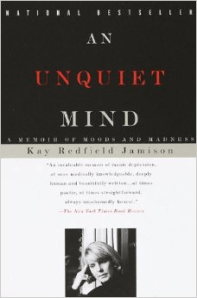
I recently read An Unquiet Mind: A Memoir of Moods and Madness by Kay Redfield Jamison. It is an older book, published in 1995. In it, Jamison details her life events beginning in childhood through adulthood with Bipolar I disorder.

She focuses mainly on the mania part of her disorder and on the love relationships of her adult life, as well as on her experiences with lithium, the drug used to treat her bipolar disorder. Much detail is given to her academia life as a psychologist, and to her world travels as woman who never had children, making this memoir a bit inaccessible to me as a homemaker and stay-at-home mom.

Moreover, I have bipolar type II, have never been on lithium, nor have I experienced the extreme manic highs of Bipolar type I disorder, so I couldn’t identify with much of her story, making this book a bit of a disappointment to me and a waste of money for me.

However, if you have Bipolar I and long-term treatment with lithium, you will be able to identify with a lot of what Jamison writes.

Bipolar Moments – Weight Gain

image

Bipolar Moments – Showering

image