The Do’s and Don’ts of Mental Health Blogging

newspaper

The National Institute on Mental Health (NIMH) news reports that over 50 research studies worldwide have found that the type of news coverage on suicides makes a difference in the influence it has on the suicide rates of its viewers who are at risk for it.

The longer and the greater the coverage of a suicide story, the more likely vulnerable individuals may commit suicide themselves. Explicitly describing the suicide method and using dramatic headlines are big no-no’s as well.

However, “careful” reporting on suicides can change public misperceptions and dispel myths, thereby encouraging those at risk to seek help.

What does this mean for us mental health bloggers?

blogger

While our audience may not be in the millions like network television stations or hundreds of thousands like those of major newspapers and internet news sites, I think we should still be responsible in how we describe our own struggles with mental illness and our own thoughts on self-harm and suicide.

I have seen bloggers on either end of the spectrum here. On one hand, some are overly cautious and post “trigger warnings” on most everything they write or vlog about. Trigger warnings are little blurbs that say, “Hey, I am getting ready to write or talk about something that could trigger negative symptoms in you, so continue reading/listening at your own risk.”

I like trigger warnings because sometimes I am in a bad space with my own mental illness symptoms to where listening to someone talk about their self-abuse habits or their detailed thoughts of suicide may cause me some sleepless nights at best, and at worst, may tempt me to entertain such ideas myself.

I have also come across bloggers who write about or post vlogs about the details of their childhood abuse, which is a huge negative trigger for me. For those of you who put trigger warnings on this type of stuff, I thank you, because I will skip those parts entirely. Maybe some people want to read about it; maybe it helps others, but for me it triggers panic attacks. In my opinion the details of such events are best dealt with in therapy or within your own private journal.

Now, I am not proposing we don’t mention the fact that the abuse happened at all. If it did, it is important to validate the horrifying affect it had on us. I am merely suggesting that the minute details of the specific acts themselves be kept out of public posts. To me, the negative effects on the reader far outweigh any positive ones.

Another hot topic in the mental health blogosphere is self-harm behaviors. Some bloggers not only name the behavior, which is acceptable in my opinion, but go on to detail why they do it, what it feels like and looks like, and the thrill or release or whatever “positive” thing they are getting out of it. I understand it works for many people (I used to be one of those individuals; I get it!) However, sensationalizing it, as the NIMH states, only encourages others to do it, and that is not what we want.

Based on NIMH’s suggestions, I propose that we bloggers:

  • Help reduce the risk of contagion by including posts or links to treatment services, warning signs and suicide hotlines.
  • Include stories of hope and recovery; information on how to overcome self-harm behaviors and cope with suicidal thinking.
  • Focus on solutions rather than just the problems.

What suggestions would you have for mental health bloggers?  Share them in the comment section below.

For a side-bar list of suicide warning signs you can include in your posts visit http://reportingonsuicide.org/warning-signs-of-suicide/

If you or someone you love is suicidal you can call the U.S. National Suicide Prevention Lifeline at 1-800-273-TALK (8255), a free, 24/7 service that can provide support, information and local resources. For those outside the U.S., visit http://www.suicide.org/international-suicide-hotlines.html to find suicide hotlines in your country.
Mental Illness and Anonymity

mental illness anonymity

There are several reasons why I choose to maintain my anonymity on this mental illness blog.

The primary reason is to avoid hurting family members. Many of my mental illness symptoms, in particular my anxiety, are directly related to childhood events. For me to publicly identify myself while revealing facts about my upbringing would be harmful to my family members.

Even though there are benefits of adding my face and real name to the content of this blog, such as increased credibility and to support the cause for an end to the mental illness stigma, I will not do so at the expense of another’s peace of mind and privacy.

The second biggest reason I choose to maintain my anonymity is to maintain a sense of humbleness to my message. Money, power, and prestige are not my goals. Sharing what it is like to have mental illnesses and what I do to strive for healing and peace are my goals, with the hope to inspire others struggling with similar issues.

My greatest wish is that no one ever feels like they are unique. People need to know that they are not the only ones who feel the way they do, that someone else understands how they feel and has gone through what they are going through.

Another reason I choose to maintain my anonymity is because just as I would not announce at my job or highschool reunion or in a restaurant, whether it be to a large group of people or just one or two persons I didn’t know well, that I have a mental illness, why should I do so online?

I tell those whom I am close to, to those whom I trust, when the time is appropriate and when I believe it would be helpful to the situation. Anything beyond this is not necessary for me.

This is what works for me. It may be the same, or different, for you. What are your thoughts on online anonymity and mental illness?

Thoughts on Greenberg, a Mental Patient, a Movie

Today, I watched the movie Greenberg, which was released back in 2010, but I had never seen it until now. It is about a 40-year-old man named Roger Greenberg (played by Ben Stiller) who recently suffered a “nervous breakdown”, and takes some time away from his New York life to house-sit for his brother in L.A.

movie, Greenberg, mental patient, mental illness

My educated guess is that Greenberg is bipolar, although a brief “stay in a mental hospital” is all that is mentioned. His erratic behavior, self-obsession, hypercriticism, mania, impulsivity, and anger issues cause many problems in his relationships with others and with his own peace of mind. Sound familiar?

He hooks up with his brother’s assistant, Florence, a passive somewhat flighty 25-year-old, who offered the most memorable line in the movie for me as she was talking to her friend about Greenberg:

“You can tell that a lot of normal stuff is really hard for him.”

…like maintaining friendships, hosting a get-together, shopping, driving, and taking care of the family dog when it becomes ill, to name a few.

As big of an A-hole as this Greenberg could be, I felt bad for him because a lot of normal stuff is really hard for me, too, and I often get frustrated with myself…the same way Greenberg’s brother and friends get with him for “not trying harder” or “not being able to control his emotional outbursts” or “obsessing over things.”

Florence seems to see beyond Greenberg’s neurotic behaviors. She sees him not as the jerk he is on the outside, but as a person who is victim to a disease he can’t completely control.

It was a weird movie that left me feeling unsettled because it wasn’t one of those feel-good endings like he conquered all of his demons and was cured. He was still the same…just a bit more grounded with her in his life.

This post isn’t meant to be a movie review. It is meant to process the take away message I gathered, which is that Greenberg’s an ass because he has a mental illness and he’s lucky he found someone who understands that.

Seems rather depressing to me, but is this reality for some of us…if we are lucky?

What are your thoughts? How many rude, obnoxious, mean people do you know? Have you ever considered the fact that they may have a mental illness whose symptoms are flaring up? And that if they didn’t have a mental illness, they might be fairly tolerable and decent to people the majority of the time? Is mental illness an excuse for bad behavior or merely an explanation, or both?

How Abnormal Are You?

abnormal mental illness

“The real hopeless victims of mental illness are to be found among those who appear to be most normal…Many of them are normal because they are so well adjusted to our mode of existence, because their human voice has been silenced so early in their lives, that they do not even struggle or suffer or develop symptoms as the neurotic does. They are normal not in what may be called the absolute sense of the word; they are normal only in relation to a profoundly abnormal society. Their perfect adjustment to that abnormal society is a measure of their mental sickness. These millions of abnormally normal people, living without fuss in a society to which, if they were fully human beings, they ought not to be adjusted.”  ~ Aldous HuxleyBrave New World Revisited

This quote kind of blows my mind. If I understand it correctly, Huxley is saying that those who are normal, or well-adjusted to life, are actually the abnormal ones, and those of us (myself included) who are “neurotic” or according the psychoanalytical theory have a:

“poor ability to adapt to one’s environment, an inability to change one’s life patterns, and the inability to develop a richer, more complex, more satisfying personality” as evident by mental illnesses such as depression, acute or chronic anxiety, obsessive–compulsive tendencies, specific phobias, such as social phobia, arachnophobia or any number of other phobias, and some personality disorders: paranoid, schizotypal, borderline, histrionic, avoidant, dependent and obsessive–compulsive

are the normal ones.

What do you think about this? Do you agree with this view of what is normal versus abnormal? Do you think that those of us with mental illness are more sensitive to the tragedies and injustices of the world? If so, why are those who aren’t as sensitive considered to be “normal” in the sense that they are mentally healthier than those of us with mental illness? Who are really the sick ones here?

Please share your thoughts in the comments below. Any type of discussion this quote may spark is appreciated.

Never Give Up

I write these for you…….and me.

cropped-img_4114

Please like Write into the Light on Facebook. Thank you.

Now On Facebook

Hey, Guys. I just set up a page for Write into the Light on Facebook. Please go there now and LIKE. Thanks so much!

xo,
WIL

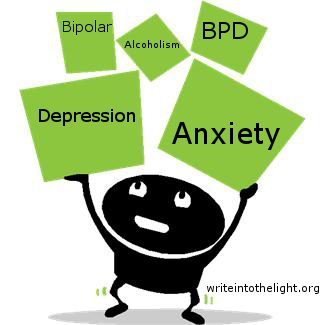
Co-occurring Disorders

juggle

I found this helpful article on causes and solutions of having dual diagnoses (substance abuse AND mental illness.) I wanted to bring to you some interesting facts and highlights. To view the handout in its entirety click here to download the Hazelden Foundation’s pdf.

Factors involved in the development of psychiatric disorders:

1. Vulnerability (determined by genetics and early life experiences)
2. Stress (challenges faced in life)

Factors that can help reduce symptoms and relapses:

1. Abstaining from alcohol and drug use

“Avoiding alcohol and drug use can reduce biological vulnerability in two ways. First, because substances affect the brain, using alcohol or drugs can directly worsen those vulnerable parts of the brain associated with psychiatric disorders. Second, using substances can interfere with the corrective effects of medication on vulnerability. This means that somebody who is using alcohol or drugs will not get the full benefit of any prescribed medications for his or her disorder, leading to worse symptoms and a greater chance of relapses.”

2. Take prescription medications according to your doctor’s orders
3. Learn to use positive coping skills
4. Develop social support systems
5. Engage in meaningful activities

Which factors are you incorporating into your life to help reduce symptoms and prevent relapses? Which factors do you need to add?

Is Mental Illness Popular?

micro soft image

Is mental illness a hot topic? I am not sure, but you all have been doing an awesome job at reading and sharing my posts because according to blog industry experts, the more popular your blog becomes the more s-p-a-m it is likely to get. Thank God for Akismet!

Next month is Write into the Light’s 2-year blogiversary!

another micro soft image

…which has me reflecting on my current goals for this blog as well as for Turtle Way’s blog (Turtle Way is a compilation of works submitted by artists and writers who have mental illness or have been affected by others with mental illness.)

Current Goals (in no particular order:)

  • I toyed with the idea of stopping Turtle Way’s publication until I reviewed the recent stats and saw that the issue released back in January is still receiving a great number of views. Yay! I love that people continue to (hopefully) gain strength and support from the artists and writers published there.
  • This brings me to Write into the Light’s original and primary purpose which is to offer understanding, strength and hope to all persons sufferring from mental illness.
  • In that light (no pun intended 🙂 ), I am going to place a lot of time and effort this year into finding a publisher for my daily meditation book. The daily reflections are written specifically for persons who have mental illness.
  • The newest and final goal I have to share with you, thus far, is to assemble a list of subscribers who would like to be part of a pilot audience for my book. This would involve receiving sneak-peeks of my daily reflections and providing feedback as necessary on how they affect you…if they help you cope with your illness or not…if they make sense to you or not…etc.

I have yet to finalize the logistics on this, but I am thinking of doing it either by email or password protected posts.

If you are interested in being a part of this pilot study and are willing to provide honest feedback (like serious critique) on how helpful or not-working-for-you-at-all these writings are, please email me at writeintothelight@live.com or leave a comment below.

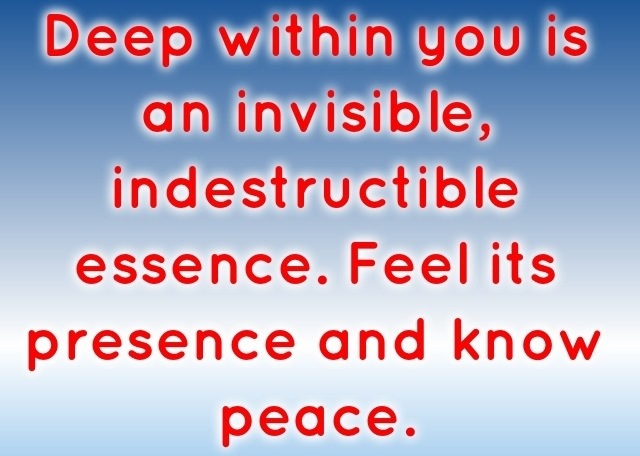
Meet Your True Being

You are NOT your mental illness.
20130305-223302.jpg

10 Simple Ways to Beat the Winter Blues

bluesIf you are like me then winter is not your friend. The cold, dreary days tend to drag on, as cabin fever sets in and depression, boredom, lack of motivation and lethargy begin to choke the life out of me.

I came across this entertaining, well-written article on Psych Central by author, Therese J. Borchard. Borchard lists these suggestions to help you battle the winter blues.

1.  Be of service to others

I started cooking new-to-us, healthy recipes as my husband and I committed to losing weight before bathing suit season arrives. I feel like I am doing something extra special for my family as I spend an hour or more each night chopping, dicing, and slicing fresh fruits and vegetables, and preparing scrumptious home-cooked meals. The weekly planning and execution of such dishes (compared to a box meal or popping a pizza in the oven) alone helps to battle my boredom as well.

2.  Join a gym

I did this – Yeah!!! The problem?  I never went! A gym is a great idea for some, but not for me. Because of my anxiety, I have a hard enough time getting out of the house for essentials like doctor’s appointments. I am more successful with a mile walk around the neighborhood where I can take my time and hide behind my sunglasses rather than going to the gym and risk having to interact with anyone.

3.  Use a light lamp

I do this, and it helps a lot. After 45 minutes in front of my light, I feel energized and ready to get off the couch and do something productive (like make those dinners.) I use my light twice a day, once in the morning and once in the late afternoon. It really does work.

4.  Wear bright colors

I am an earthy kind of girl, wearing lots of browns, blacks, and greens.  Neutral colors fill my closets, so I have not tried this suggestion out, but it makes sense that bright colors could lift your mood.

This morning, I walked into a new doctor’s office and the walls were painted a dreamcicle, creamy orange, and adorned with bright impressionist paintings.  It was a breath of fresh air.  I literally felt calmer and happier as I sat there, surrounded by these bright, yet soft, colors.

5.  Force yourself outside

I step outside when I let the dogs out, mainly to have a cigarette, but hey at least I am getting out!  I also go for walks outdoors.

6.  Hang out with friends

This is a tricky area for me.  I meet with a small group of women once a week and overall, it helps my mood.  Having face-time with close friends definitely enhances my emotional well-being, but too much of it drains me physically and mentally.  Migraines often follow visits that last too long.  My limit for any type of social situation is about two hours.

7.  Head south

We have always taken our family vacations during the summer months when the kids are out of school.  Last year, however, I convinced my husband to head south during the month of December specifically for this reason – to battle my seasonal depression.  It worked…for that month anyway.

We will probably do it again next year, but will shoot for January or February instead.  The December trip was great, don’t get me wrong, but I think my depression really takes a nose dive after the holidays, so a trip in January would be more ideal.

8.  Learn something new or start a home project

This winter I have been editing our home videos.  I even splurged and bought a software program to add fun effects to them.  It takes me several hours to do a ten minute video, but the results are very cool and satisfying.

Creative projects like video editing, painting, and photography keep my mind off the bleak weather conditions.  When my hands are idle, my mind wanders and that is never a good thing for me.

9.  Limit sugar intake

Sugar-crashes and weight gain….’nuf said.

10.  Take Omega-3’s

My suggestion on this is to talk to your doctor.  I take them, but I don’t feel they make a huge difference (if any at all) on my emotional health.

What do you do to battle the winter blues?  Share your tips in the comments.  Also, while you’re here, I invite you to subscribe to this blog.  Thanks and have a blue-free day.