
Mental Health Goal #1
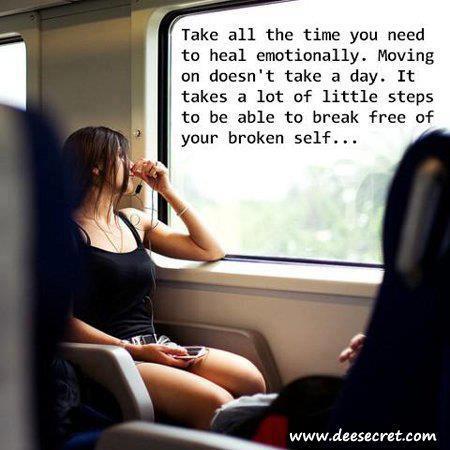
“The challenge we all face is how to integrate after loss or conflict and return to a greater wholeness of self. This is accomplished through social supports, coping, and other resources. This we call the process of emotional healing…” – from People Can Recover From Mental Illness, an article by Daniel Fisher, M.D., Ph.D. and Laurie Ahern
When it comes to mental illness what can I say that has not already been said? Not that it matters. Maybe it does. I don’t know. All I know is that I have it and so do others – others like me, who are stigmatized by the ignorance of those who don’t have it; by those who have it but don’t know it; by those who have it but act like they don’t.
How can one understand an experience if they can’t experience it first hand? I don’t believe they can. Intellectually they may be able to comprehend the phenomenon, but bodily, mentally, emotionally, and spiritually, they cannot.
In my experience, except for three people in my life (one being my therapist), others do not even want to understand. It is so far beyond their comprehension that they don’t even ask questions, research, or read about mental illness. Only one other in addition to the above three shows sincere concern for my symptoms and experiences with mental illness. I am grateful that I at least have four people who care. I probably have more but they either don’t know how to show it or don’t know enough to know they should show it.
I don’t think the stigma of mental illness will ever go away outside of those who actually have it. If people could only open their minds and their hearts to see beyond the craziness, the depression, the manic behaviors, the anger, the insecurities, the social anxiety, and the dissociation – all of which most people have to some degree or another, though they’d never admit it – then maybe they would see a soul; souls who just like them are doing the best they can within the physical limitations of their bodies and minds. Maybe then they would learn how to validate rather than ignore or worse, shun or even worse, judge. Maybe then they could become allies to our healing journeys rather than obstacles.
My last post included a video about how those with mental illness have a body/mind sickness, not a “self” sickness. After reading some of the comments, I had some follow-up thoughts which I wanted to share here as well, for my own mental reminder and hopefully, for the benefit of others out there in Blogland.
What is our make up as “beings?” I believe the human or mortal part is made up of the mind and body, and the spiritual or immortal part is the “self” (a.k.a, the Divine, God, etc.) Thinking of it in terms of God, our Creator, connects all the pieces of the religious/spiritual puzzle for me. I can’t quote the bible verses, but phrases like “the Great I am,” “be still and know that I am,” “what you do unto others you do unto me,” and “made in His image” all point to this “self” – the part that isn’t sick, the only part that really matters, because it is forever while the mind and body are temporary.
“We are not human beings having a spiritual experience. We are spiritual beings having a human experience.” ~ Teilhard de Chardin quotes (French Geologist, Priest, Philosopher and Mystic, 1881-1955)
As the Universe would have it, another blogger posted some relevant information just yesterday, from The Upanishad (introduced and translated by Eknath Easwaran.) The Upanishads are the oldest and one of the most universal of messages which inform us that there is more to life than the everyday experience of our senses – including our physical and mental illnesses!
Some excerpts from Indian Spirituality:
“The Self is one, though is appears to be many. Those who meditate upon the Self and realize the Self go beyond decay and death, beyond separateness and sorrow. They see the Self in everyone and obtain all things.”
“Control the senses and purify the mind. In a pure mind there is constant awareness of the Self. Where there is constant awareness of the Self, freedom ends bondage and joy ends sorrow.”
“The Self, pure awareness, shines as the light within the heart, surrounded by the senses. Only seeming to think, seeming to move, the Self neither sleeps nor wakes nor dreams.”
“When the Self takes on a body, he seems to assume the body’s frailties and limitations; but when he sheds the body at the time of death the Self leaves all these behind.”
“Brahman is the infinite, supreme soul. Brahman is all-prevailing, and the visualized world is a tiny part of the same. Whatever we see or feel with other senses (as in Biology) is Divine Illusion or Maya, and is Asat or untrue. The Only Truth or Sat is Brahman. We, or our souls (Jeev-Atma), are infinite small parts of Brahma.
In Hinduism, Brahman (ब्रह्मन् bráhman) is the one supreme, universal Spirit that is the origin and support of the phenomenal universe. Brahman is sometimes referred to as the Absolute or Godhead which is the Divine Ground of all being. Brahman is conceived as personal (“with qualities”), impersonal (“without qualities”) and/or supreme depending on the philosophical school.”
That last sentence is what makes me completely baffled by so-called “religious wars,” because really, we seem to all believe in the same thing. So, what are we fighting over? Semantics??? How sad!
Anyway, back to the “self.” I have heard people greet one another with the word “Namaste.” I always thought it meant “peace to you” or something along those lines. Yesterday, however, when I was watching a video on The Light Way blog about Rapid Eye Technology, I learned the true meaning of namaste, which made for the third time in three days from three different sources that the same message of this “self” was delivered to me. I love when that happens. It’s like God frantically waving His arms over His head saying, “Are you hearing me??? Are you paying attention?”

According to Organic Spa Magazine,
“the literal translation [of namaste] is a little more nuanced and suggests that it is not a superficial gesture or word but has deep spiritual significance” such as:
“All sacred in me greets all sacred in you.”
“Honor the peace within.”
“The light in me honors and respects the light in you.”
“I bow to the divine in you.”
“The light in me recognizes the light in you.”

In order for these truths to help me cope with my mental illnesses, I have to continue searching and learning more about them. It’s a never-ending spiritual journey that doesn’t always “feel” good. I also have to talk about it with others, who understand, daily and honestly. And finally, I write a lot and create a lot of digital art (and some paintings) that reflect these truths, so that I am constantly reminding myself. (btw, the digital art in this post is not mine but listed on elfwood.com as public domain. Thank you to those creators.)
What beliefs do you have that help you cope with yourself as a person with mental illness? How do you keep these beliefs in the forefront of your mind? I would love to know. Please share!
Do we do things we don’t want to in order to please others? When we say “no” do we often feel guilty? Martyrdom is for saints. We are not saints. We are also not bad. We are sick and we are trying to get well.
Unless we are doing for others for “fun and for free” we are harming ourselves as well as lying to ourselves and others about our motives for helping them.
Today, I will give freely that which I can afford to give. I will not risk my physical, emotional, or mental health by saying yes when I want to say no or by feeling guilty for making my health my top priority.
Often our symptoms are triggered by stress. Although, the bigger stressors aren’t usually the ones that get us. We may actually feel better in times of crisis. It is the little stressors that seem to befuddle us; our day-to-day activities somehow become more overwhelming than a huge crisis might be.
Crises are often short-lived. Anyone can do almost anything for one day. Daily responsibilities, on the other hand, are life-long. And when we focus on the “life-long” part, we may feel like giving up. Yet, there is another way – to stay in today.
Today, I will fulfill my responsibilities to myself first and next, to those around me to the best of my ability. I will focus on my tomorrows when they become my todays and I will know peace.
I cry out for order and find it only in art. ~ Helen Hayes
The correlation between creative and passionately driven individuals and mental illness appears to be high. We are in impressive company:
Isaac Newton, most famous mathematician of the 17th Century, is suspected to have had Bipolar Disorder which was an unknown illness during his lifetime.
Ludwig van Beethoven, composer, had bipolar disorder.
Abraham Lincoln, 16th President of U.S., suffered from major depression.
Vincent Van Gogh, famous painter and artist, is thought to have experienced bipolar symptoms.
Winston Churchill, Prime Minister of Great Britain, (who, along with Roosevelt and Stalin, led the world to the defeat of Hitler in WWII) had major depression.
Virginia Woolf, the British novelist, experienced the mood swings of bipolar disorder her entire life. “She wrote to make sense out of her mental chaos and gain control of madness; and was greatly admired for her creative insight into human nature.”
The list goes on and on:
Leo Tolstoy, author
Charles Dickens, English author
John Keats, poet
Michelangelo, artist
Bette Midler, entertainer
Charles Schultz, cartoonist
Dick Clark, entertainer
Peter Illyich Tchaikovsky, composer
Charlie Pride, singer
Sylvia Plath, poet and novelist
Janet Jackson, singer
Patty Duke, actress
Roseanne Barr, comedian
Marlon Brando, actor
Ernest Hemingway, Pulitzer Prize-winning novelist
Tennessee Williams, American playwright
Today, I will write down two aspects of my life that have been positively affected by my mental illness; perhaps, someone I have met that I otherwise wouldn’t have or a creative talent I possess. I will acknowledge the silver lining in the cloud of my mental illness and know that I am not unique in its negative or positive aspects.
 Write into the Light